

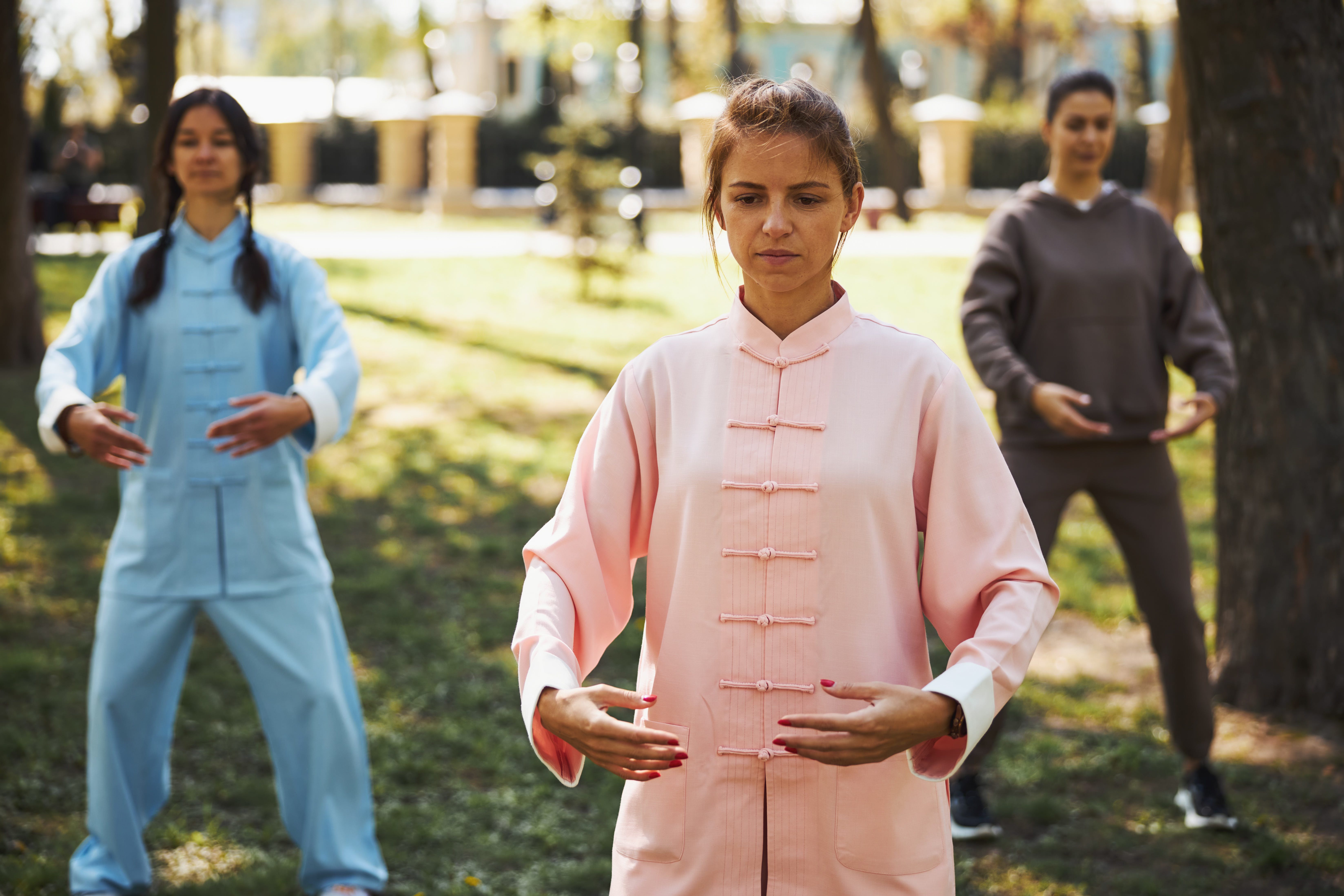
Wuji (無極) is often introduced as the simplest exercise in the internal arts: stand and relax. In practice, most people discover that standing correctly is difficult. Wuji is not a relaxation drill and not a posture to hold. It reorganizes how the body manages gravity. The task is not placing the body into a shape but removing the effort previously required to remain upright. When alignment is correct, breathing deepens, the mind quiets, and stability appears without strain. These are outcomes of structure.
Stand with the feet shoulder-width apart and parallel, resting evenly on the ground without gripping. Weight settles around the middle of the foot rather than the heels or toes so the floor supports rather than resists. Allow the balance to shift slightly forward until the lower back stops tightening. Soften the knees enough to regulate height rather than support weight. They track over the toes and do not collapse inward. Release the hips as if sitting onto a high stool so the Kua opens and weight leaves the knees and travels into the feet. The pelvis neither tucks nor arches but hangs, allowing the tailbone to release downward so the lumbar spine opens.
Soften the sternum without collapse so the ribcage stops holding the body upright. Breath drops into the abdomen. The crown lifts while the chin settles so the body suspends upward and settles downward at the same time. Shoulders drop and widen until their weight connects to the feet. Hands rest in front of the lower abdomen, rounded without tension. The shoulder blades spread and the spine lengthens because compression is gone. The jaw releases, the eyes soften, the tongue rests on the palate, and breathing becomes deep without control.
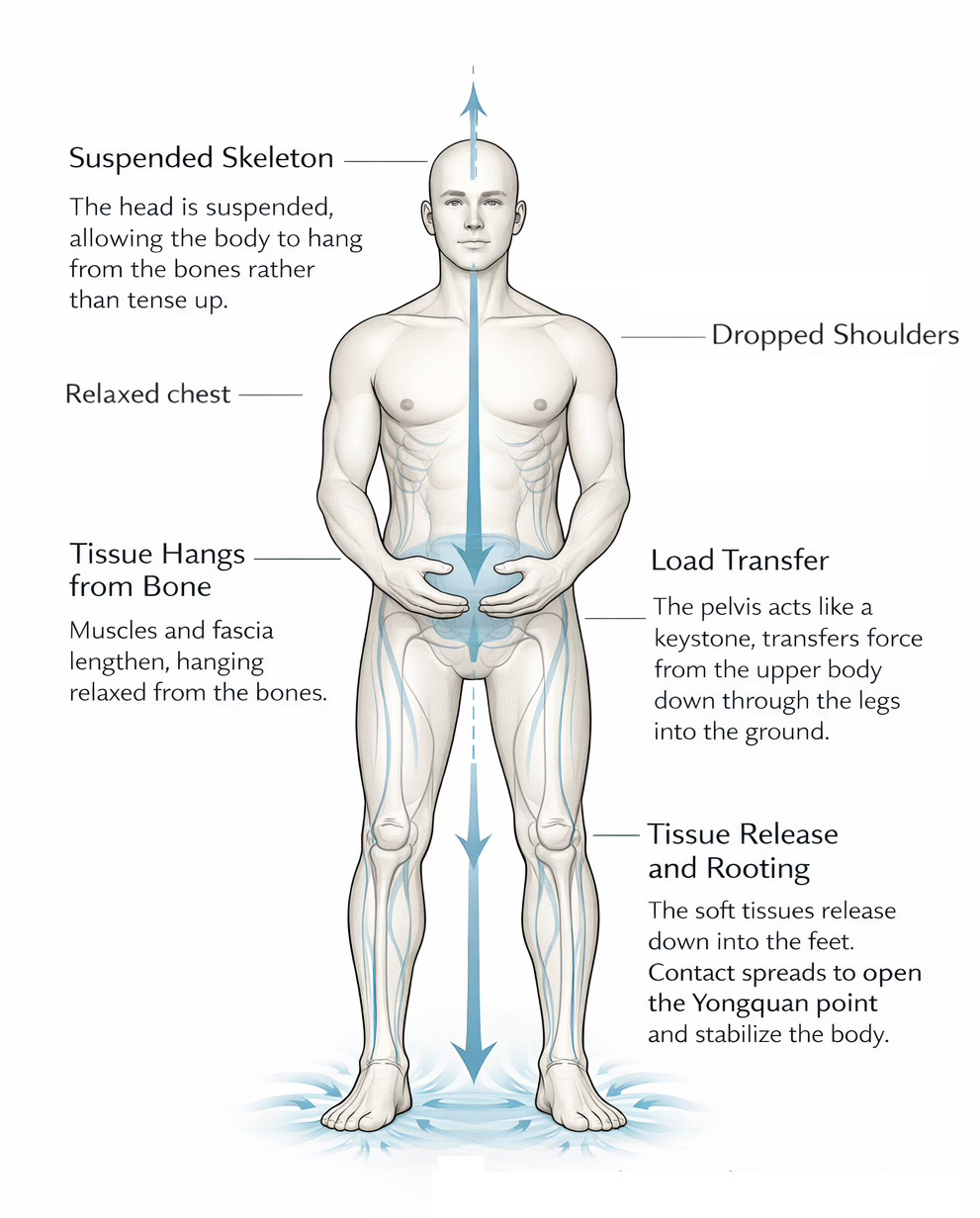
These instructions are structural. The body stops holding itself up with muscular effort and allows weight to pass through the skeleton into the ground. Muscles stop bracing and lengthen along the bones. Standing changes from an action into a condition. Effort previously used for stability becomes unnecessary once weight routes correctly.
The pelvis functions as a keystone. It redirects pressure from the torso into the legs and floor. When aligned, the knees no longer carry weight and tension leaves the hips. The legs transmit force rather than support it. The body balances slightly forward. Standing into the heels compresses the lower back; settling forward releases the lumbar region and opens the spine. The body feels as if it might fall but remains stable
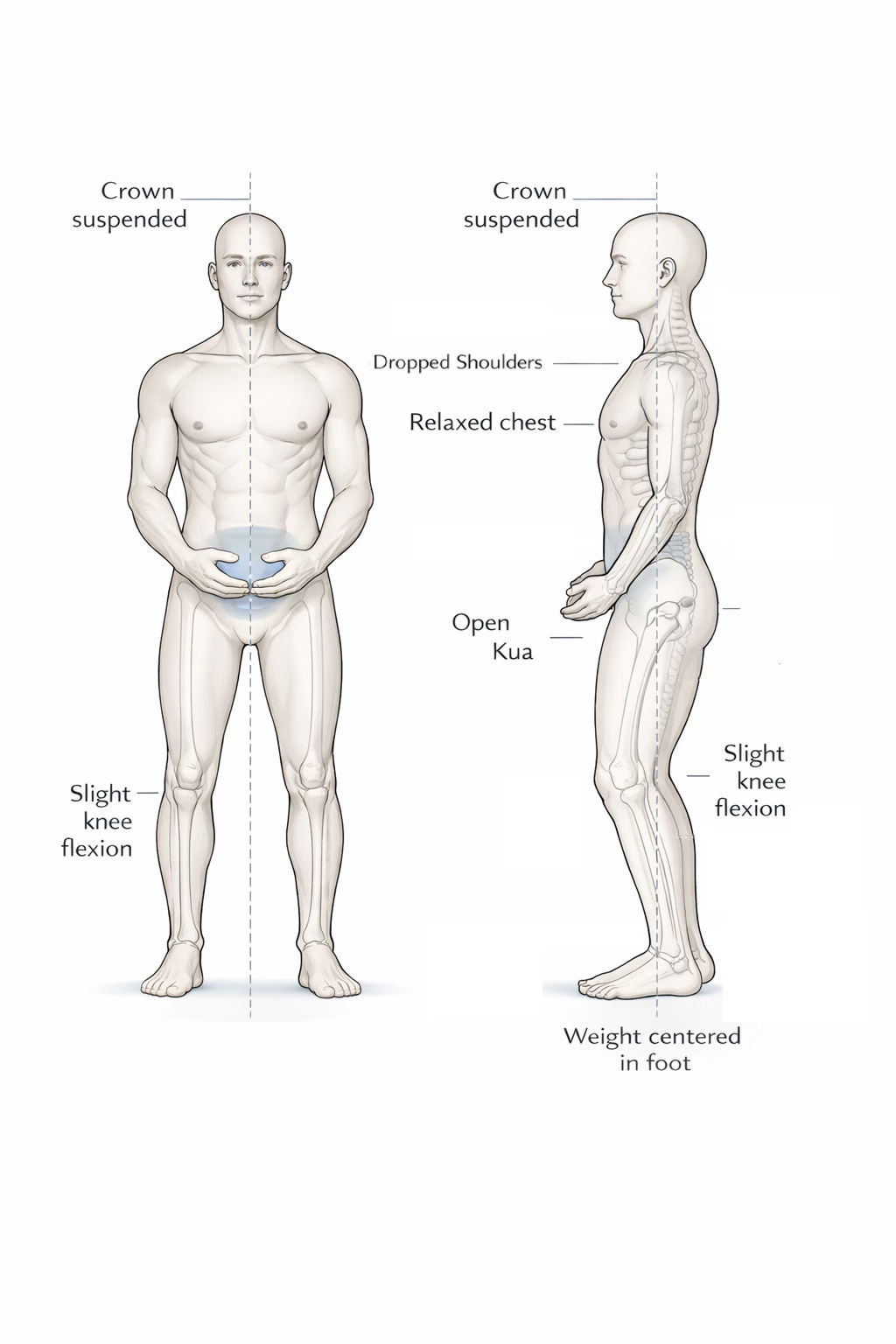
The spine is balanced along its axis rather than straightened. The torso appears upright while the curves remain natural and the vertebrae separate as pressure leaves them. As the hips open, the upper body feels separated from the legs while becoming more connected. This is the opening of the Kua. The body shifts from rigid unit to suspended structure in which force travels through connective pathways instead of muscular bracing.
Rooting follows the same process. It does not come from pushing downward or imagining weight sinking. As tension releases through the legs, tissue settles into the arches and contact spreads. The feet widen and stabilize without gripping, and the ground supports the body. Posture no longer requires maintenance. Small adjustments occur on their own—rotations and shifts outside voluntary control. Connective tissue reorganizes the bones through micro-adjustments, refining alignment beyond intention. The posture holds the practitioner.
Breathing changes again. The abdomen expands while the chest stays quiet, producing internal fullness with external relaxation. Mental stillness follows the removal of instability. Physical balance produces psychological calm.
Wuji trains the ability to let structure support the body. Once established, movement does not disturb stability. Walking, lifting, and practicing forms express the same alignment. Without it, movement remains muscular activity; with it, movement transmits ground force through a relaxed body.
Wuji is not preparation for practice.
Wuji is the practice that makes all Qigong possible.
Wuji Standing — Structural Checklist
Feet shoulder-width, parallel
Weight centered mid-foot
Balance slightly forward
Knees softly bent, track over toes
Hips release (open Kua)
Pelvis neutral, hanging
Tailbone releases downward
Lumbar spine decompresses
Chest softens, not lifted
Breath drops to abdomen
Crown suspended upward
Chin settles naturally
Shoulders drop and widen
Elbows hang
Hands rounded before lower abdomen
Shoulder blades spread
Spine lengthens without straightening
Jaw releases
Tongue rests on palate
Muscles stop bracing
Weight transfers through skeleton
Feet widen and root
Like what you read? Keep exploring…
If this post resonated with you, you’ll love my book:
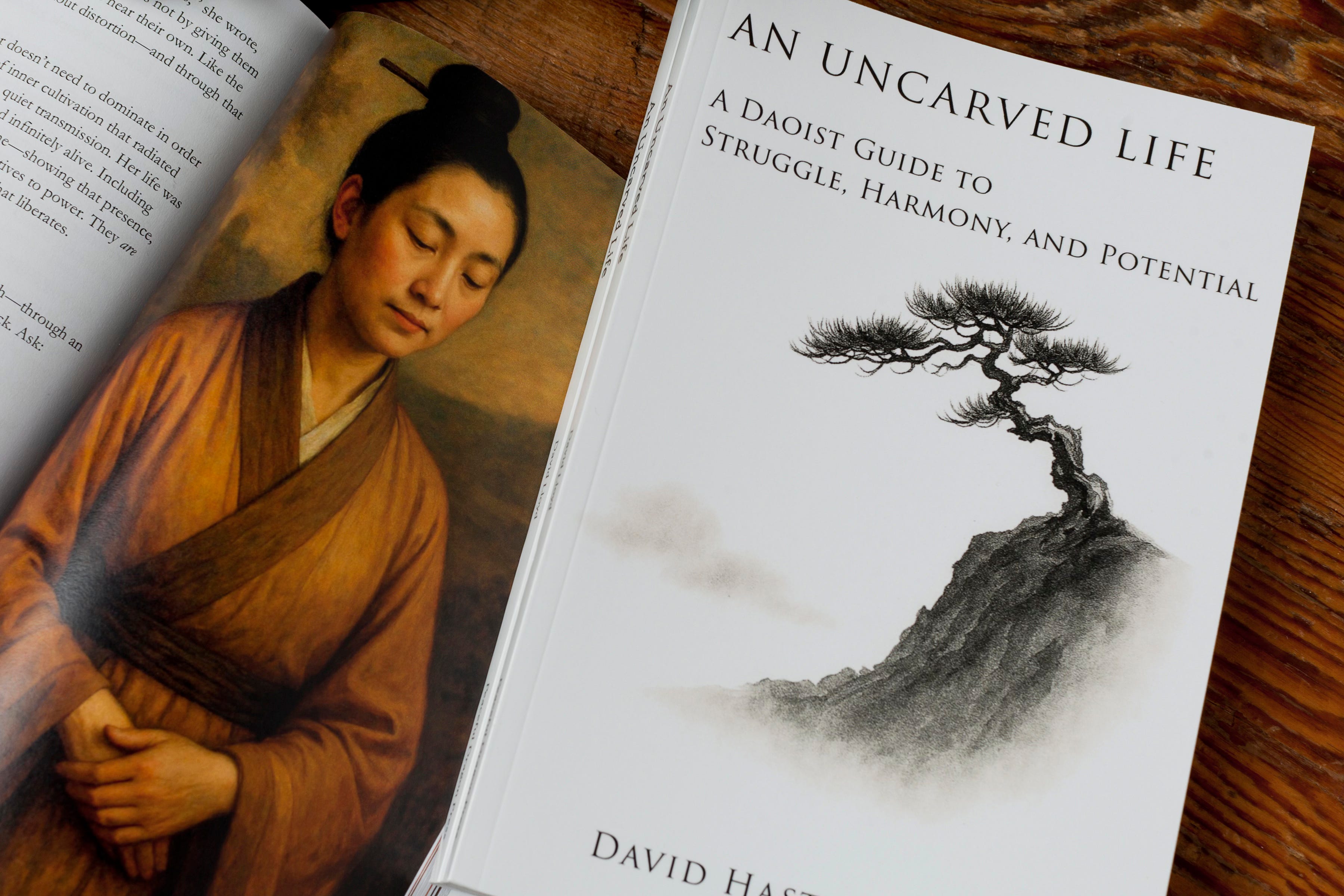
An Uncarved Life: A Daoist Guide to Struggle, Harmony, and Potential
This book blends timeless Daoist wisdom with real-world insight into how we can navigate struggle, cultivate inner peace, and live in alignment with our deeper potential. Drawing from classical texts like the Dao De Jing and integrating modern psychology and neuroscience, An Uncarved Life offers a grounded, poetic, and deeply personal guide to living well in a chaotic world.
Whether you’re seeking clarity, calm, or a more meaningful path forward, this book is a companion for anyone who wants to walk the Way with sincerity and strength.
Available now in print, Kindle, and audiobook formats.
Click here to get your copy on Amazon