Why I Started Writing About the Science of Qigong
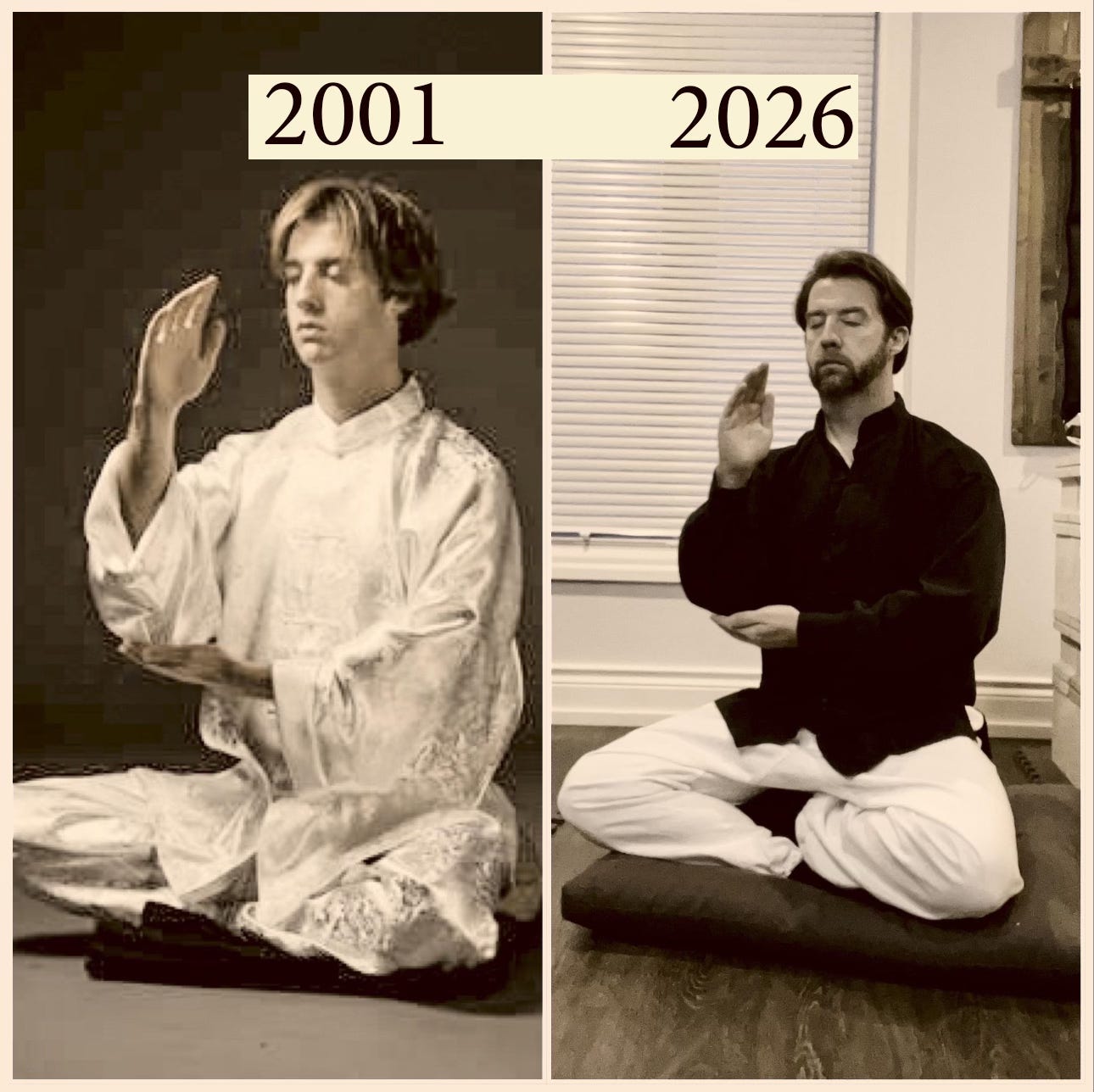
I have studied Qigong for more than thirty years, and for over twenty of those years I have taught these practices to students and clinicians interested in how breath, posture, movement, and attention influence the body. For the past several years I have also been writing regularly about the scientific research on Qigong here on Substack. Those research reviews have accumulated to more than four hundred articles examining clinical studies and physiological research related to these practices.
Throughout that time one question continued to appear in both my teaching and my research.
What happens in the body when people practice Qigong regularly?
Traditional explanations come from the language of Chinese medicine and Daoist philosophy. In that framework Qigong regulates the flow of qi and restores internal balance. These ideas belong to a long and important tradition, but they do not translate easily into the language of modern physiology.
At the same time, a growing body of research has examined practices closely related to Qigong. Clinical studies now measure how breath regulated movement and meditative attention influence the nervous system, circulation, respiration, sleep, inflammation, and brain activity.
These findings raise a simple question.
If these practices produce measurable physiological changes, how should we understand them scientifically?
That question led me to build this Substack.
The Purpose of This Blog
I created this blog as a place to examine the scientific research surrounding Qigong and related practices.
Many people learn Qigong through martial arts schools, traditional Chinese medicine clinics, or wellness programs. These settings teach the movements and meditative elements of the practice, but they rarely examine the research literature that has developed around these methods.
Over the past several decades researchers have studied medical Qigong, Tai Chi, and breath regulated movement training in clinical trials. These studies report changes in blood pressure, autonomic nervous system activity, lung function, sleep patterns, inflammatory markers, and neural activity in the brain.
Practices once described through the language of internal energy now appear in measurable physiological terms.
This Substack explores that research.
Over time the studies I was reading began to point toward the same pattern. Similar regulatory changes appeared across different areas of physiology. The same themes repeated across studies examining different health outcomes.
Eventually it became clear that the material deserved a more systematic explanation.
That led to a new book.
A New Book: The Science of Medical Qigong
My new book, The Science of Medical Qigong: How Breath, Movement, and Attention Transform the Body, examines the scientific research surrounding Qigong in a structured way.
This is not a beginner practice manual. The book does not teach Qigong routines.
Instead it analyzes the physiological research associated with these practices.
Drawing from clinical and experimental studies, the book examines how Qigong influences several major regulatory systems of the body, including:
• autonomic nervous system regulation
• cardiovascular function and blood pressure
• respiratory mechanics and lung capacity
• sleep quality and recovery
• inflammatory and immune signaling
• brain function and neural plasticity
• cognitive performance and mental health
Each of these areas appears frequently in the research literature. When viewed together they reveal a consistent pattern.
A Common Mechanism
One of the central arguments of the book is that many of these effects arise from a shared underlying mechanism.
Qigong practice combines slow breathing, coordinated movement, upright posture, and sustained attention. When practiced regularly these elements stimulate the body’s regulatory systems in a coordinated way.
The nervous system regulates breathing. Breathing rhythms influence cardiovascular activity. Cardiovascular signals feed back into neural control centers in the brain.
Repeated practice strengthens these regulatory relationships.
In physiological terms Qigong functions as a form of system level regulatory training. Rather than targeting a single organ or disease category, the practice trains the coordination between major regulatory systems.
Classical Chinese medicine describes this outcome as internal harmony. Modern physiology describes it as improved coordination across interacting biological systems.
Both perspectives point toward the same process.
Regular practice alters how the body regulates itself.
Where to Find the Book
If you want a research based explanation of how Qigong influences the body and mind, the book is available here:
This Substack will continue examining the research surrounding Qigong, Chinese medicine, and mind body training.
Like what you read? Keep exploring…
If this post resonated with you, you may enjoy my new book:
The Science of Medical Qigong: How Breath, Movement, and Attention Transform the Body
This book examines the growing body of scientific research exploring how Qigong practice influences human physiology. Drawing from clinical trials and experimental studies, it explains how coordinated breathing, posture, movement, and focused attention interact with the body’s regulatory systems.
The book explores research on:
• autonomic nervous system regulation
• cardiovascular function and blood pressure
• respiratory mechanics and lung capacity
• sleep quality and recovery
• inflammatory and immune signaling
• brain function and neural plasticity
• cognitive performance and mental health
Rather than presenting Qigong through mystical language, The Science of Medical Qigong approaches the subject through physiology, neuroscience, and clinical research, offering a clear explanation of how regular practice can influence the coordination and harmony of the body’s systems.
Available now in print, Kindle, and audiobook formats.
Click here to get your copy on Amazon


I'm eager to have get a copy of this book! I personally have been doing qigong for about 25 years. I can attest to its value in ways ranging from increased and sustained agility and endurance to balance and to reduction in inflammatory and stress induced illness.
We studied qigong in my research group at Dartmouth's Geisel School of Medicine for a number of years. I now teach qigong to students in my community. In both situations, I believe that qigong changed people's lives.
Like other forms of knowledge, when one learns and practices qigong, the practice and its benefits belong to you!
I'm a long term reader of Dr. David Lloyd's Substack. It's always well done, worth reading, top flight!