


Zen Buddhism—originally called Chan Buddhism in China—is often presented through stories, gestures, or silence rather than formal definition. This creates the impression that it lacks structure or doctrine. In practice, Zen maintains a consistent orientation and expresses it through training rather than belief.
Traditional summaries trace this orientation to Bodhidharma’s fourfold formula: a special transmission outside the scriptures; not relying on words or letters; pointing directly to the human mind; seeing one’s true nature and becoming a Buddha. The point is not rejection of learning but refusal to treat explanation as recognition. Zen begins with experience: what is present before interpretation and what changes when interpretation loosens.
Direct Seeing
Zen emphasizes observation over theory. The aim is not to hold correct ideas about reality but to watch how experience assembles moment to moment. Thoughts appear, perception organizes, emotions assign value, reactions follow. Practice studies this process as it occurs.
Concepts remain useful for orientation but do not replace observation. Knowing an account of awareness differs from recognizing awareness while it operates. Zen therefore treats language as provisional and expects understanding to be confirmed in experience rather than agreement.
Buddha-Nature
Zen teaches that awakening is not added from outside. Buddha-nature refers to the capacity for recognition present before interpretation. Practice removes confusion rather than producing a new state.
Seeing one’s nature does not generate a new identity. It alters the relation to identity. Personality and memory remain but stop serving as a constant reference point. Reactions organize less around defense and acquisition.

No Fixed Self
Zen holds that the sense of a continuous self is assembled. Memory, expectation, naming, and emotional investment generate a center that feels stable. Practice does not remove this functional identity. It reveals its dependence on conditions.
This connects with impermanence and interconnectedness. Experience changes continuously and no element stands alone. When seen directly, attachment weakens because nothing fixed can be secured. Reduction of ego comes through recognition rather than suppression.

Zazen
The primary formal practice is seated meditation, zazen. The posture is upright and still. Attention rests with immediate experience without manipulation. The purpose is not relaxation or trance but observation of mental activity as it forms and dissolves.
Because practice does not pursue unusual states, clarity must appear within ordinary awareness. Zazen trains perception to remain present without interference and prepares attention for activity.
Everyday Activity
Zen does not confine practice to meditation periods. Walking, eating, working, speaking, and responding to others serve as the testing ground. Presence in daily activity outweighs special experience during sitting.
If understanding disappears under ordinary conditions, it has not stabilized. Practice continues during conversation, fatigue, disagreement, and routine work. Insight must operate where life occurs.
Non-Dualism
Zen challenges habitual divisions: self and other, success and failure, sacred and ordinary. Non-dualism does not remove distinctions in use; it removes the assumption that they exist independently. Experience is encountered directly rather than filtered through fixed categories, often described as not one, not two.
This functions as perceptual training rather than abstract philosophy. When interpretation loosens, oppositions lose rigidity and response adjusts to circumstances.
Conduct
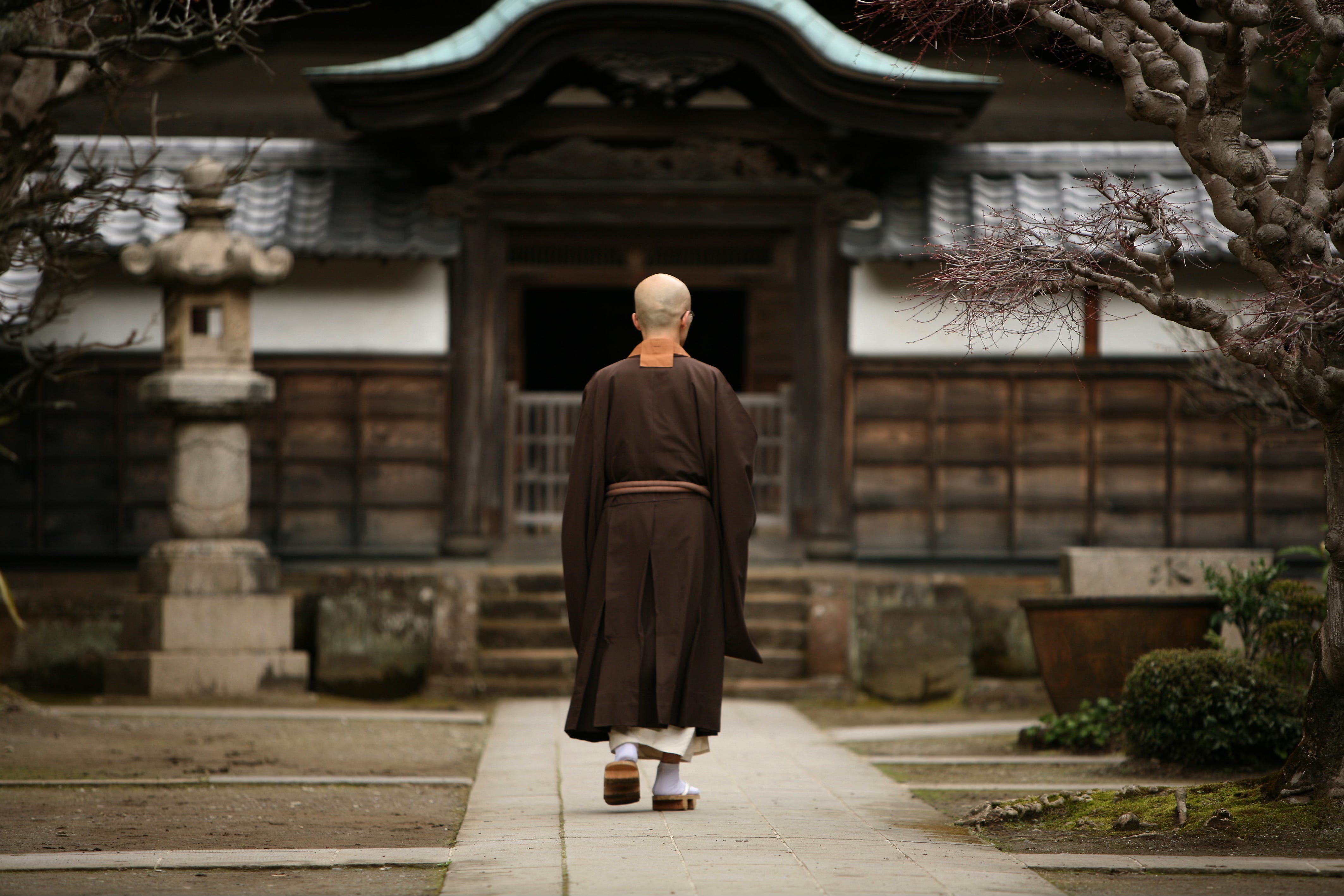
Zen evaluates understanding through behavior rather than description. Speech, timing, posture, and response to events demonstrate practice. Ethical conduct stabilizes perception; it is expressed rather than imposed.
Some modern teachers summarize this orientation as not-knowing, bearing witness, and compassionate action. Releasing fixed ideas prevents premature certainty. Direct experience prevents avoidance. Appropriate action follows from accurate perception.
No Final Endpoint
Zen does not treat awakening as a permanent conclusion. Insight appears, stabilizes, fades, and deepens across changing conditions. Because life changes, practice continues. Realization cannot become possession without turning back into concept.
Study, doctrine, and experience become attachments when taken as final. Practice continues as long as conditions continue.
What This Means
Taken together, Zen teaches: observe directly rather than rely on explanation; use identity without centering on it; treat ordinary life as practice; let behavior confirm understanding; avoid final conclusions.
Zen provides no worldview to adopt. It provides a method for examining how worldviews arise and dissolve within experience.
Like what you read? Keep exploring…
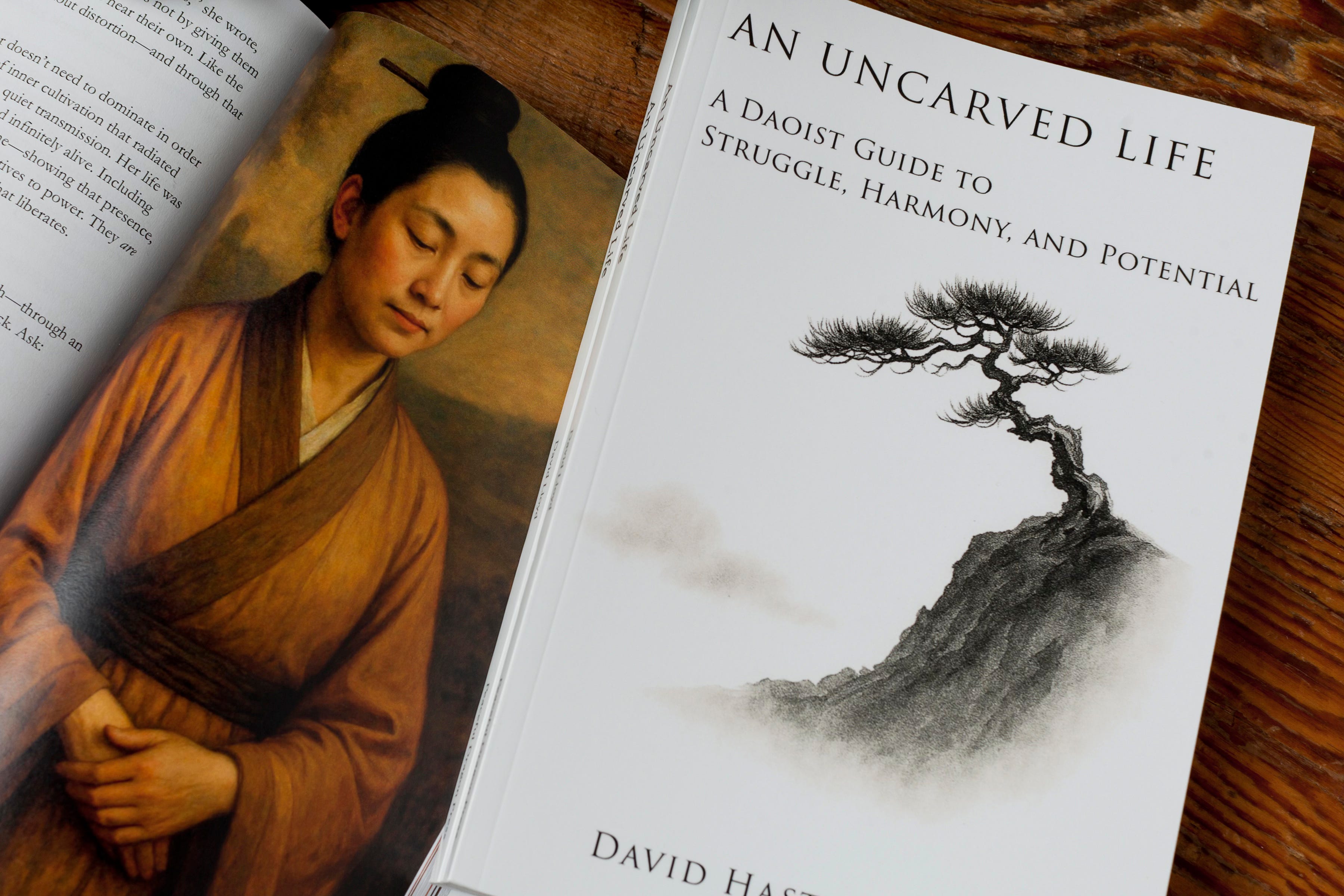
If this post resonated with you, you’ll love my book:
An Uncarved Life: A Daoist Guide to Struggle, Harmony, and Potential
This book blends timeless Daoist wisdom with real-world insight into how we can navigate struggle, cultivate inner peace, and live in alignment with our deeper potential. Drawing from classical texts like the Dao De Jing and integrating modern psychology and neuroscience, An Uncarved Life offers a grounded, poetic, and deeply personal guide to living well in a chaotic world.
Whether you’re seeking clarity, calm, or a more meaningful path forward, this book is a companion for anyone who wants to walk the Way with sincerity and strength.
Available now in print, Kindle, and audiobook formats.
Click here to get your copy on Amazon