

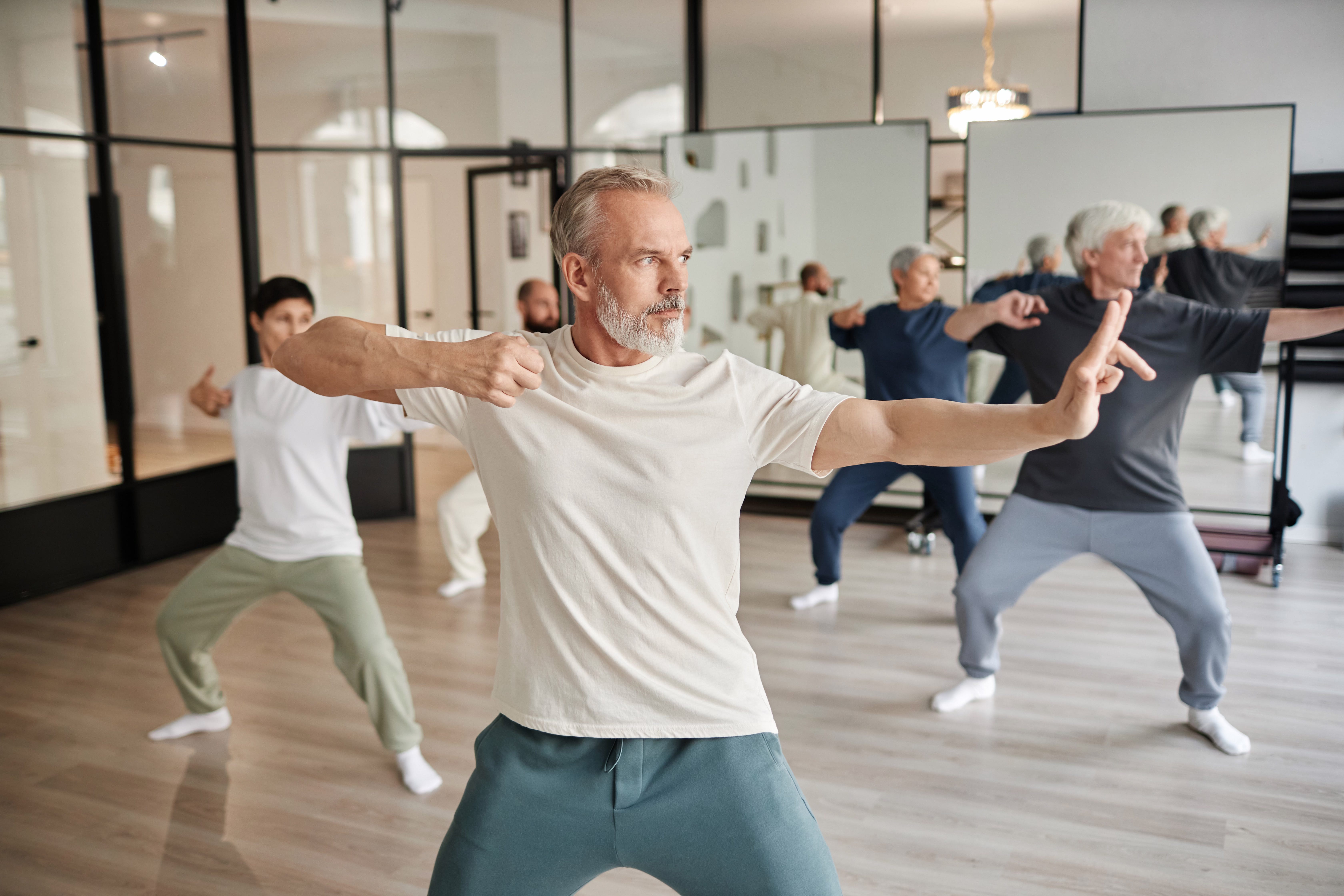
In a 2020 study published in Evidence-Based Complementary and Alternative Medicine, Jing Zhou and colleagues examined the characteristics of clinical research on Baduanjin published between 2000 and 2019. The purpose of the review was to understand how this traditional Chinese exercise has been studied in modern clinical research and to evaluate the overall direction and quality of that work. As interest in traditional movement practices has expanded in rehabilitation medicine and preventive healthcare, the authors set out to clarify what the existing evidence actually contains and where the research still needs improvement.
Baduanjin, often translated as “Eight-Section Brocade,” is one of the most widely practiced forms of traditional Chinese exercise. The method combines slow physical movement, rhythmic breathing, and mental regulation. For centuries it has been used as a method of maintaining health. In modern clinical contexts it attracts attention because the movements are gentle, require no equipment, and can be practiced by older adults or individuals with chronic disease.
Why Researchers Became Interested
The appeal of Baduanjin in modern medicine comes from its accessibility. Many chronic conditions require long-term lifestyle interventions rather than short-term treatment. Exercise programs that are physically demanding are often difficult for older patients or individuals with chronic illness to maintain. Baduanjin offers a different model of movement practice. The exercises are slow, coordinated with breathing, and structured in short sequences that can be repeated daily.
Because of these characteristics, researchers have increasingly investigated Baduanjin as a rehabilitation tool and as a method of supporting long-term health maintenance. Clinical trials have explored its use in metabolic disease, cardiovascular conditions, respiratory disorders, neurological rehabilitation, and musculoskeletal pain.
What the Researchers Analyzed
To understand the overall state of the research, Zhou and colleagues conducted a large database search covering both Chinese and international academic literature. The search included four English-language databases and four Chinese databases and focused on publications between 2000 and 2019.
The initial search identified more than five thousand publications. After removing duplicates and excluding studies that did not meet the inclusion criteria, the authors analyzed 810 clinical publications that examined Baduanjin as an intervention.
These studies included a wide range of research designs. The largest group consisted of randomized controlled trials. The remaining literature included systematic reviews, nonrandomized clinical studies, case series, and a small number of case reports. Most of the studies were conducted in mainland China, reflecting the cultural origin of the practice and the strong institutional support for research on traditional exercise systems.
The Numbers Behind the Research
When the researchers examined the full body of literature, the scale of the research field became clear. The database search initially identified 5,660 publications related to Baduanjin. After removing duplicate records and excluding studies that did not meet the inclusion criteria, 810 clinical publications remained for analysis. Of these, 614 were randomized controlled trials, making them the largest category of evidence. Smaller numbers of systematic reviews, nonrandomized studies, and case series were also identified. Across the clinical trials that reported participant numbers, the average sample size was about eighty participants, although individual studies ranged from small pilot trials to studies with nearly two thousand participants. Most interventions lasted around twelve to eighteen weeks and involved practice sessions of roughly thirty-five minutes performed several times per week. Together these numbers show that research on Baduanjin is no longer limited to isolated experiments but now represents a substantial body of clinical investigation spanning two decades.
The Conditions Studied
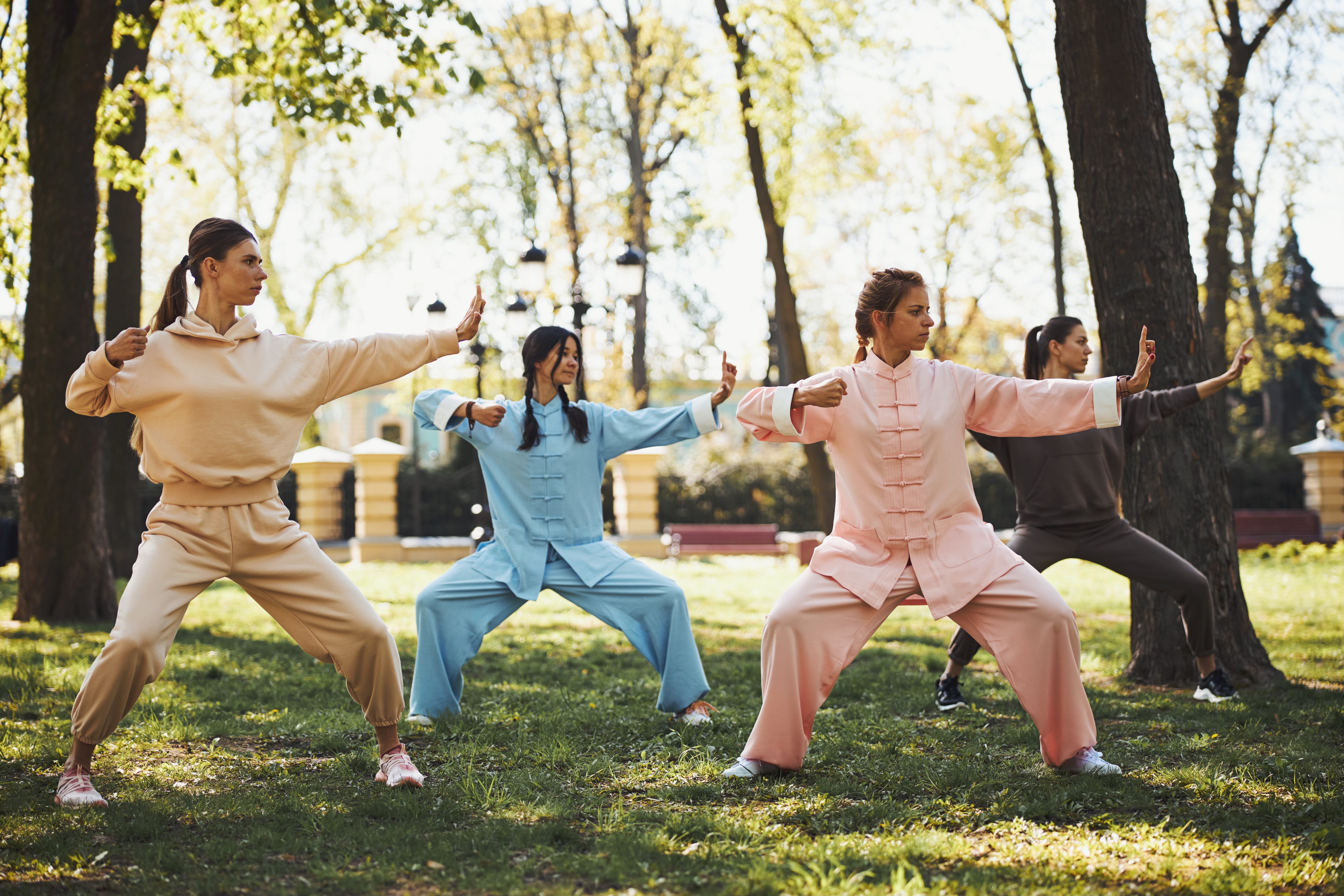
One of the most revealing findings from the review concerns the range of health conditions studied. Baduanjin has been investigated across dozens of different diseases. The most frequently studied conditions included diabetes, chronic obstructive pulmonary disease, hypertension, low back pain, neck pain, stroke, coronary heart disease, cognitive impairment, insomnia, and osteoporosis.
The review shows that this body of research is not concentrated in a single medical category. When the studies were grouped according to the International Classification of Diseases (ICD-11), the largest number of trials fell into three broad areas. These were disorders of the musculoskeletal system, endocrine and metabolic diseases, and cardiovascular diseases. Together these three categories accounted for the largest portion of the clinical research literature.
Musculoskeletal disorders formed one of the largest groups of studies. Conditions such as low back pain, neck pain, and mobility limitations were common targets for Baduanjin interventions. In these contexts the exercise was typically used as a gentle rehabilitation activity designed to improve flexibility, balance, and functional movement. Many of these trials evaluated pain scores, disability indices, or measures of physical function following several weeks of regular practice.
Metabolic and endocrine conditions represented another large category of research. Diabetes appeared most frequently in this group, making it the single most studied condition across the entire dataset. In these studies researchers often evaluated blood glucose levels, lipid profiles, body mass index, and quality-of-life measures. These trials generally examined whether consistent low-intensity exercise could support metabolic regulation alongside standard medical care.
Cardiovascular diseases were also widely studied. Trials examined patients with hypertension, coronary heart disease, and stroke rehabilitation. In these settings Baduanjin was often used as a structured physical activity program for individuals who may not tolerate higher-intensity exercise. Researchers commonly measured outcomes such as blood pressure, exercise tolerance, cardiac symptoms, and general functional capacity.
Respiratory diseases formed another important category. Chronic obstructive pulmonary disease was the most frequently studied respiratory condition. In these trials the breathing coordination built into Baduanjin practice made the exercise particularly relevant. Researchers often evaluated lung function, exercise tolerance, and symptom scores related to respiratory distress.
Neurological and cognitive conditions also appeared in the literature. Some studies examined cognitive impairment or recovery following stroke. Others evaluated sleep disorders and mental health indicators such as anxiety and depression scales. These studies reflect growing interest in how slow movement practices that combine breathing and attention may influence both neurological recovery and psychological regulation.
A smaller but still meaningful number of studies examined bone health and age-related conditions such as osteoporosis or osteopenia. In these cases the goal was often to improve balance, reduce fall risk, and support general physical stability in older adults.
When these categories are viewed together, a broader pattern becomes visible. Baduanjin has been applied across diseases that involve different organs and physiological systems. The same exercise intervention appears in metabolic disorders, cardiovascular disease, respiratory illness, neurological rehabilitation, and musculoskeletal pain conditions. This wide distribution suggests that researchers are not treating Baduanjin as a narrowly targeted therapy for a single disease. Instead, it is being studied as a low-intensity regulatory exercise that may influence multiple aspects of health simultaneously.
This pattern reflects the structure of the practice itself. Baduanjin combines controlled breathing, gentle physical movement, and mental regulation. These elements influence circulation, respiratory rhythm, joint mobility, and psychological state at the same time. Because of this integrated structure, the exercise has been tested in clinical populations that share a common feature: chronic dysregulation across several physiological systems rather than a single isolated pathology.
How Baduanjin Was Practiced in the Studies
The review also examined the details of how Baduanjin training was implemented in clinical research. Across the studies, the average training session lasted about thirty-five minutes. Participants typically practiced once or twice per day and three to five days per week. The average intervention period was about eighteen weeks, although some studies lasted much longer.
These patterns reveal a common structure across many trials. Participants engage in moderate-length sessions repeated regularly over several months. This approach resembles the structure used in many rehabilitation exercise programs where gradual adaptation occurs through repeated exposure rather than high-intensity effort.
What Changed in Participants
The outcomes measured in these studies varied widely. Many trials examined laboratory markers such as blood glucose levels or lipid profiles. Others evaluated symptoms using clinical scales for pain, sleep quality, depression, anxiety, or fatigue. Functional measures such as balance ability and body mass index were also assessed in some studies. Quality-of-life questionnaires appeared frequently as well.
When these results are viewed together, a consistent pattern emerges. Improvements were often observed across several types of outcomes at the same time. Participants sometimes showed changes in physiological markers, symptom scales, and functional ability during the same intervention period.

Interpreting the Physiological Effects
The physiological interpretation of these results comes from the structure of the exercise itself. Baduanjin combines slow movement with controlled breathing and sustained attention. The movements involve gentle loading of the musculoskeletal system, coordinated respiratory patterns, and steady postural control.
Repeated practice over weeks or months creates gradual conditioning effects. Circulation, respiratory efficiency, mobility, and psychological regulation can change together as part of a broader shift in physiological regulation. The studies included in this review often measured these outcomes separately, but the pattern across results indicates that the intervention operates at the level of whole-system adaptation rather than a single isolated mechanism.
Limitations of the Research
Despite the large number of studies, the review identified several important limitations in the research literature. Many clinical trials had relatively small sample sizes. The average study included around eighty participants, which limits statistical power.
Methodological reporting was also inconsistent. Many studies did not clearly describe randomization procedures or allocation concealment. Blinding was uncommon, which is expected for exercise interventions but still introduces possible bias when outcomes are measured.
Another issue concerns variation in the intervention itself. Although Baduanjin is a traditional exercise system, studies used different versions of the routine and different training schedules. Some trials used the standardized version released by the State General Administration of Sport of China in 2003, while others used modified or locally adapted forms. These differences make direct comparison between studies more difficult.
Safety Findings
Safety reporting was relatively limited, but the available data suggest that Baduanjin is a low-risk intervention. Only a small proportion of studies reported adverse events, and those events were generally mild. Reports included temporary muscle soreness, fatigue, dizziness, or brief discomfort during exercise. No serious adverse events related to Baduanjin were reported in the reviewed studies.
Final Perspective
The overall picture that emerges from this review is clear. Clinical research on Baduanjin has grown substantially over the past two decades and now includes hundreds of trials across many different health conditions. The exercise appears safe, accessible, and adaptable for clinical populations.
At the same time, the quality and consistency of the research still need improvement. Larger studies with clearer methodology and standardized training protocols would allow researchers to better understand the health effects of this traditional exercise system.
For clinicians and practitioners, the practical conclusion is measured. Baduanjin has accumulated a significant body of research and continues to attract interest in rehabilitation medicine. Future studies with stronger design and consistent intervention methods will help clarify its role in modern healthcare.
Reference
Zhou, J., Yu, Y., Cao, B., Li, X., Wu, M., Wen, T., Xiong, Y., Jia, J., & Zhao, Y. (2020). Characteristic of clinical studies on Baduanjin during 2000–2019: A comprehensive review. Evidence-Based Complementary and Alternative Medicine, 2020, Article 4783915.

Like what you read? Keep exploring…

If this post resonated with you, you may enjoy my new book:
The Science of Medical Qigong: How Breath, Movement, and Attention Transform the Body
This book examines the growing body of scientific research exploring how Qigong practice influences human physiology. Drawing from clinical trials and experimental studies, it explains how coordinated breathing, posture, movement, and focused attention interact with the body’s regulatory systems.
The book explores research on:
• autonomic nervous system regulation
• cardiovascular function and blood pressure
• respiratory mechanics and lung capacity
• sleep quality and recovery
• inflammatory and immune signaling
• brain function and neural plasticity
• cognitive performance and mental health
Rather than presenting Qigong through mystical language, The Science of Medical Qigong approaches the subject through physiology, neuroscience, and clinical research, offering a clear explanation of how regular practice can influence the coordination and harmony of the body’s systems.
Available now in print, Kindle, and audiobook formats.
Click here to get your copy on Amazon