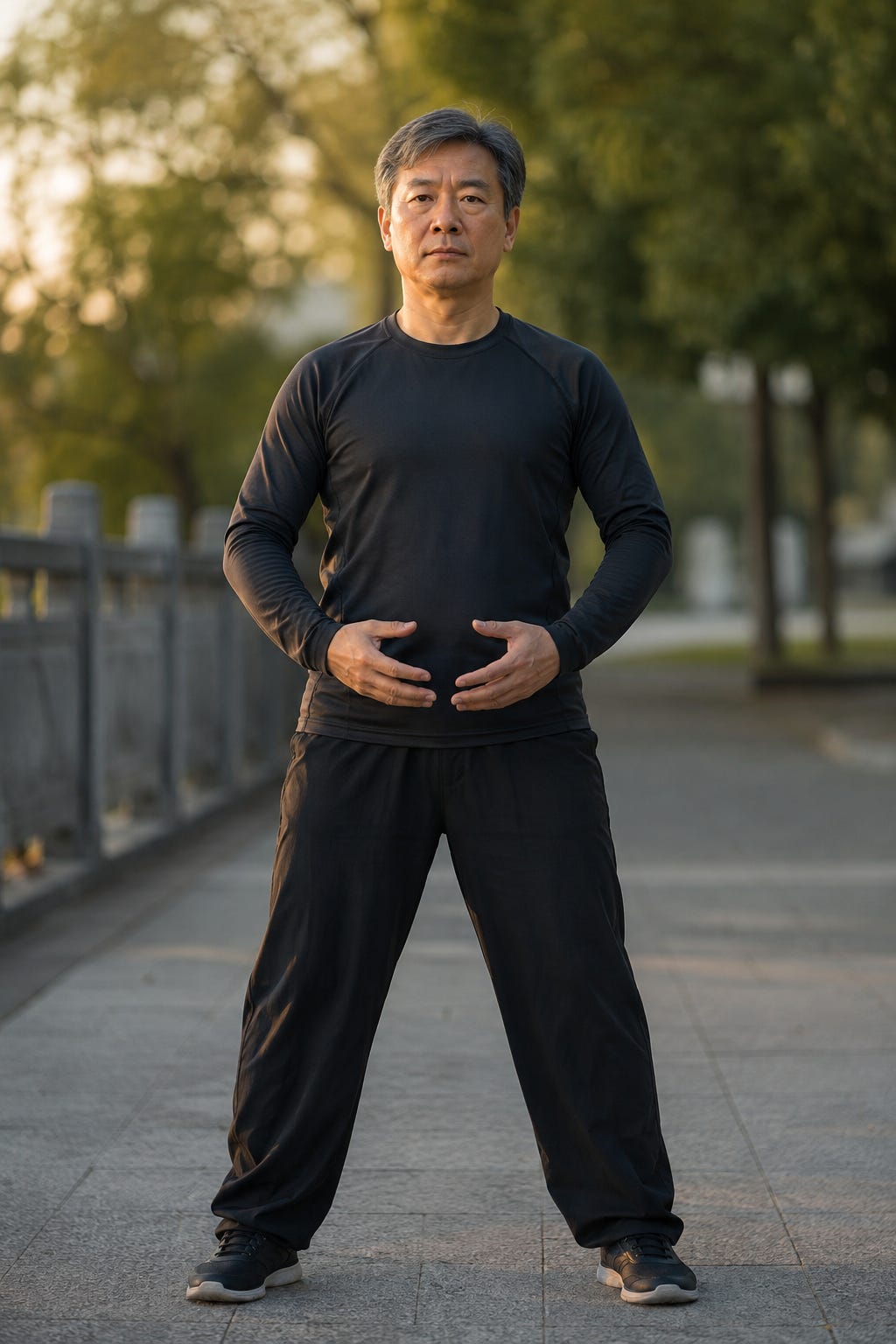
While reviewing the research for the second edition of my book, I kept returning to one central question: What is the strongest claim we can reasonably make about Qigong?
Not the most exciting claim. Not the claim most likely to attract attention online. The strongest claim that can be supported by the current scientific evidence.
After looking across the research, this is where I believe the evidence leads:
Regular, structured Qigong practice can produce measurable improvements in selected health and functional outcomes, particularly blood pressure, balance and physical function, sleep, fatigue, depressive symptoms, and quality of life.
That is actually a substantial conclusion.
Qigong research has moved well beyond showing that people simply feel more relaxed after a single session. A 2022 overview identified 58 systematic reviews of randomized trials examining Qigong and Tai Chi across a wide range of health conditions.
At the same time, Qigong is not a single, standardized intervention. Different studies use different forms, practice schedules, populations, outcome measures, and comparison groups. Its effects depend on what people practise, how regularly they practise, the condition being studied, and what Qigong is being compared with.
Within those limits, several findings stand out.
Qigong can lower resting blood pressure
This is probably the strongest disease-specific claim because blood pressure is an objective measurement and the finding appears across multiple trials and reviews.
A 2021 meta-analysis included seven randomized trials involving 370 participants. The pooled results showed substantial reductions in systolic and diastolic blood pressure among people practising Qigong.
There are still reasons to interpret the size of that effect carefully. The results varied considerably between trials, and trial sequential analysis found that the combined research had not yet reached the required information size for a firm conclusion.
Even so, the general pattern is useful. Qigong appears to perform better than no added exercise, while an active-comparison trial found that its effects were similar to those of conventional exercise rather than superior to them.
That does not make the result unimportant. It suggests that Qigong may offer an adaptable way to gain some of the cardiovascular benefits associated with regular physical activity while also training breathing, attention, and postural control.
Balance and physical function also improve
The physical effects of Qigong are sometimes overshadowed by discussions of stress and relaxation. In practice, some of the clearest findings involve balance, mobility, strength, and physical ability.
A 2023 review of Eight Pieces of Brocade Qigong examined 14 randomized trials involving 1,048 middle-aged and older adults. The pooled results supported improvements in several objective measures, including balance tests, mobility, grip strength, resting heart rate, and aspects of physical fitness.
The studies were not identical, and many of the individual outcome analyses involved relatively small numbers of participants. Still, the overall direction of the evidence supports a straightforward claim: regular Qigong can improve balance and physical function, particularly in middle-aged and older adults.
The stronger claim that these practices prevent falls belongs primarily to the Tai Chi literature. For Qigong itself, improving balance and functional ability is the more defensible conclusion.
Qigong can support pulmonary rehabilitation in COPD
Qigong has also been studied as part of rehabilitation for people with stable chronic obstructive pulmonary disease, or COPD.
A meta-analysis of ten trials involving 993 participants found pooled improvements in walking capacity, selected measures of lung function, and quality of life.
These findings support the use of Qigong as a form of pulmonary rehabilitation. Coordinated movement, controlled breathing, and gradual physical activity may help people improve their functional exercise capacity and manage some of the limitations associated with stable COPD.
The research does not show that Qigong reverses COPD or restores normal lung structure. Its value is rehabilitative. It can help people function better within the limits of an existing respiratory condition.
Sleep quality can improve
Multiple randomized trials have reported improvements in sleep following regular Qigong practice.
A systematic review of Health Qigong and sleep quality found benefits in adults both with and without existing health conditions. Across the broader literature, reported changes have included global sleep quality, sleep latency, sleep duration, sleep efficiency, and daytime function.
The evidence is strongest for how people report and experience their sleep. Most studies rely on established sleep questionnaires rather than overnight laboratory testing.
It is therefore reasonable to say that Qigong can improve reported sleep quality, particularly among older adults and people already experiencing sleep difficulties. Claims about increasing deep sleep, changing REM sleep, or altering sleep architecture would require much more evidence from polysomnography and other objective measurements.
Qigong can support people affected by cancer
Cancer research requires especially precise language.
Qigong and closely related Tai Chi-Qigong programs have been studied during cancer treatment and survivorship. A systematic review and meta-analysis found average improvements in fatigue, sleep difficulty, depressive symptoms, and overall quality of life.
Individual trials using active comparison groups have produced more mixed results. This suggests that some of the benefits may come from movement, structured activity, social participation, breathing, and focused attention rather than from one uniquely Qigong-specific mechanism.
The strongest claim is supportive, not anticancer. Qigong may help people manage fatigue, mood, sleep, and quality of life during treatment and recovery. There is no scientific basis for claiming that it treats tumours or alters cancer survival.
That distinction protects the credibility of the practice while still recognizing the value it may offer people going through an extremely difficult period.
The evidence for depression is stronger than the evidence for anxiety
Qigong is frequently promoted for both depression and anxiety, but the research does not support those two claims equally.
A systematic review and meta-analysis found evidence of improvement in depressive symptoms. The same review found insufficient evidence for a clear effect on anxiety in symptomatic populations.
The appropriate conclusion is that Qigong may support mood and stress regulation. It should not be presented as an independent treatment for psychiatric disorders, and the evidence for anxiety should not be treated as stronger than it is.
This is an important example of why broad statements about Qigong and mental health can be misleading. Different psychological outcomes need to be evaluated separately.
Cognitive benefits appear modest but promising
Research involving older adults suggests that Qigong and combined Tai Chi-Qigong programs can produce modest improvements in selected areas of cognitive function.
Changes have been reported in attention, processing speed, memory, and general cognitive performance. A 2023 systematic review and meta-analysis found beneficial effects on both cognitive and physical function in older adults.
Some individual trials have also reported associated changes in brain imaging and inflammatory markers. These findings support the view that Qigong can act as a form of cognitive and sensorimotor training.
They do not show that Qigong prevents dementia or reverses neurodegeneration. Those are much larger claims that would require long-term studies specifically designed to measure disease incidence and progression.
What about the immune system and inflammation?
The immune and inflammatory findings are real, but more limited.
It is defensible to say that Qigong and related mind-body practices can alter selected immune and inflammatory responses under particular conditions. It is not accurate to say that they generally “boost the immune system” or suppress all inflammation.
One well-known randomized trial of Tai Chi found a stronger antigen-specific immune response following training. That is a meaningful biological finding, but it is also a specific response measured under specific experimental conditions.
It does not mean that Qigong increases resistance to every infection or strengthens every part of immune function. The immune system is far too complex for a single practice to be described in those terms.
Qigong does not need one master mechanism
The strongest mechanistic conclusion may be just as important as the clinical findings:
Qigong works as repeated, multicomponent training rather than through one demonstrated master mechanism.
Qigong simultaneously trains postural control, coordinated movement, breathing, sensory processing, attention, effort, and recovery. Each of these components can influence the body through different physiological pathways.
An improvement in balance does not need to occur through exactly the same process as an improvement in sleep. A change in blood pressure may involve different pathways from a change in mood or walking capacity. The effects can overlap without requiring one universal explanation.
This is the basis of the Regulatory Conditioning Model I propose in my book on the Science of Medical Qigong. The model describes Qigong as repeated training of the processes that help the body adjust, coordinate, and recover.
It is a scientifically plausible and testable synthesis of the existing research. It should still be described as a model, however, rather than as a single mechanism that has already been proven in its entirety.
The strongest conclusion
If I reduced the entire book to one scientifically supportable statement, it would be this:
Qigong is a legitimate form of adaptable, low-to-moderate physical and attentional training that can produce meaningful clinical and functional benefits when practised regularly. Its clearest value is as an adjunctive form of exercise and regulatory conditioning, not as a cure or as evidence of one universal physiological mechanism.
That conclusion may be less dramatic than some of the claims made about Qigong, but it is far more useful.
It places Qigong where the research increasingly suggests it belongs: as a partner with other forms of structured physical and attentional training. Its effects are not identical for every person or every condition, but regular practice can produce measurable changes in how people move, sleep, function, regulate stress, and experience their health.
Breath is the one thing that stays with us from the first moment of life to the last.
Most of the time we barely notice it. Yet the quality of our breathing quietly shapes our nervous system, our emotional state, our energy, and even how clearly we think.
For over 30 years I’ve been exploring the meeting point between traditional Qigong understanding of breath and what modern physiology and neuroscience are now measuring. Heart rate variability, vagal tone, cerebrospinal fluid movement, autonomic regulation. Many of the things practitioners have felt for centuries are now showing up in the research.
That exploration became a book: Qigong and the Science of Breath.
I’ve spent the past year writing it. Unlike my earlier work on Substack, which focused more on research analysis, this book is a practical manual drawn from my work as a teacher. It looks at how we can use the breath to influence the body in clear, usable ways.
It doesn’t teach specific forms or lineage techniques. Instead it offers a clear understanding of why intentional breathing works the way it does, so you can bring more skill and confidence to whatever practice you already do.
Here’s a trailer:
The book is available now.


