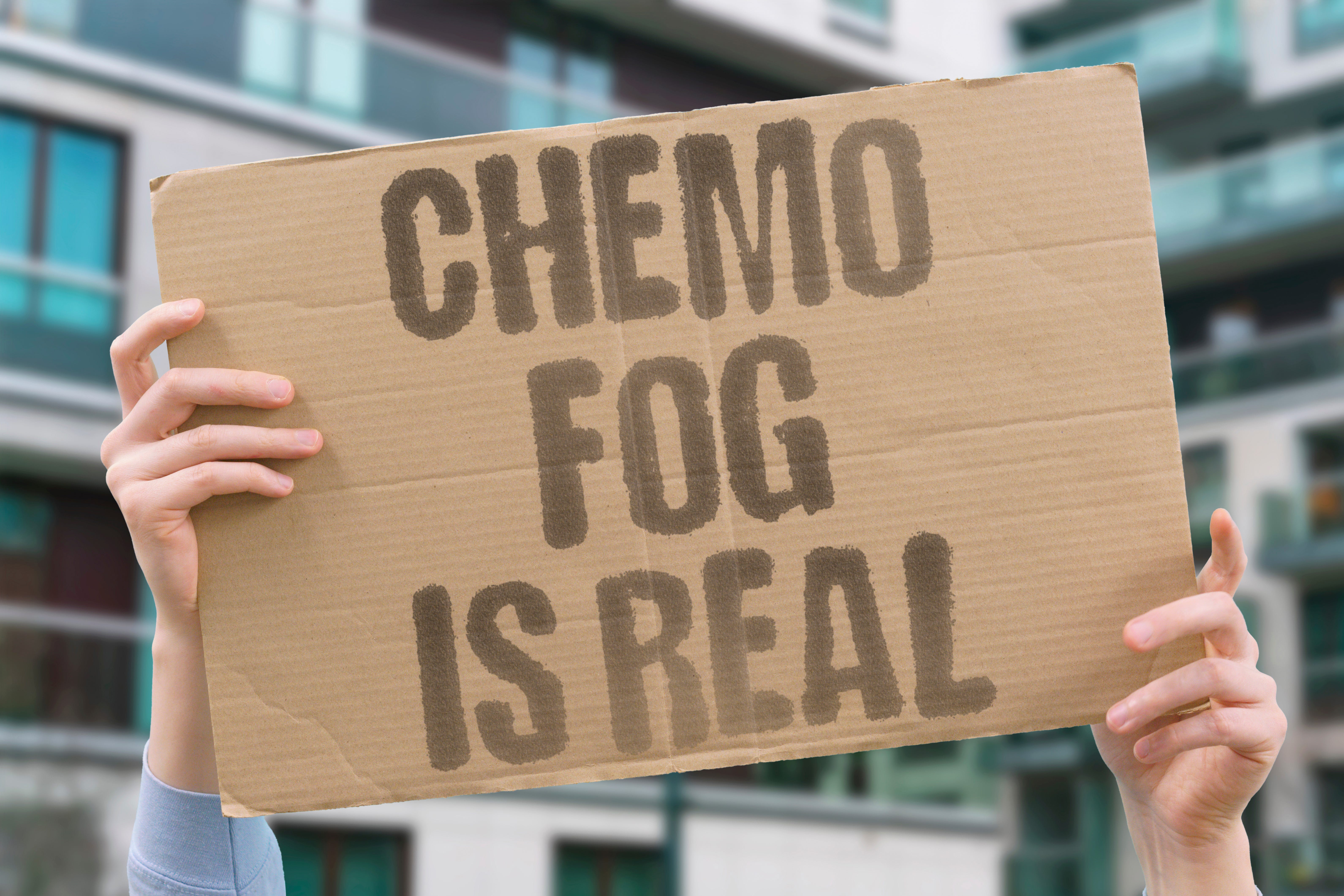
Qigong and the Fog of Chemo Brain
Recent Peer-Reviewed Published Research
Qigong and the Fog of Chemo Brain
Many people finish cancer treatment only to discover their mind has not kept pace with their body. Tasks that once felt automatic now take longer. Names disappear mid-sentence. Concentration slips at inconvenient moments. Most call it chemo brain. The clinical term is cancer-related cognitive impairment, and it is common.
Up to three-quarters of patients notice cognitive changes during treatment. Roughly one-third continue to struggle years afterward. Among breast cancer survivors the figure can still sit near 45 percent six years after therapy ends. These complaints are usually subjective. People feel the difference even when formal tests look relatively normal. Memory, attention, processing speed, and executive function are hit hardest. Anxiety, depression, fatigue, and poor sleep make everything worse. Because the problem sits so close to daily quality of life, researchers keep searching for options that do not add further risk.
A 2026 systematic review and meta-analysis in the European Journal of Oncology Nursing examined one traditional Chinese mind-body practice that has drawn steady interest: qigong. The team led by Mu-Hsing Ho at the University of Hong Kong asked a direct question. Does qigong improve how cancer survivors rate their own cognitive function?
Study selection and design
They searched six major databases from the earliest records through May 2025. Eligible studies had to include adults with confirmed cancer, a qigong-based intervention (Tai Chi, Baduanjin, medical qigong, or similar forms), a comparison group that was usually usual care, and at least one measure of subjective cognitive function. Both randomized trials and quasi-experimental designs were accepted.
Nineteen studies met the criteria. Sixteen supplied enough data for meta-analysis. Most came from mainland China; others came from the United States, Australia, Hong Kong, and Taiwan. Participants had breast, lung, gastrointestinal, and mixed cancers. Sample sizes ranged from 20 to 151. Programs lasted from three to twenty-four weeks and combined gentle movement, coordinated breathing, and focused attention. Baduanjin appeared most frequently. Many programs also included home practice supported by video or simple written guides.
Pooled cognitive outcomes
Across the sixteen studies, qigong produced a large and statistically significant improvement in subjective cognitive function compared with usual care. The pooled effect size was Hedges’ g = 1.22. In practical terms, the average person in a qigong group reported noticeably clearer thinking than the average person who did not practice. The result remained large even after individual studies were removed one at a time.
Heterogeneity was high, which is expected when trials differ in cancer type, program length, and the questionnaires used. Longer follow-up after the formal sessions appeared linked to stronger benefit, suggesting that continued practice may matter. Different forms of qigong and different questionnaires did not produce meaningful differences. The shared elements of movement, breathing, and attention seemed more important than any particular sequence of postures.
Evidence on objective cognitive performance was thin. Only two small studies measured both subjective reports and formal tests. Both showed promising signals, but the data were too limited for formal pooling. The review therefore concentrated on what patients themselves reported.
Secondary findings
Many of the same trials also recorded improvements in fatigue, sleep, anxiety, depression, pain, and overall quality of life. These secondary gains match earlier research on qigong in cancer care and may help explain the cognitive improvements. When fatigue and distress ease, thinking often feels clearer.
Clinical relevance
Subjective complaints are not trivial. They track with poorer quality of life, higher distress, and difficulty returning to work or managing ordinary routines. Patients can notice and report these problems themselves, which makes them an early target for support. Qigong requires no special equipment. It can be adapted for limited mobility, and sitting forms are already common. Nurses, therapists, or certified instructors can teach it. Several of the reviewed programs combined supervised sessions with home practice, a format that is more realistic for people living far from clinics or dealing with ongoing fatigue.
Limitations that remain
The large effect size is encouraging. The authors remain careful. Most studies used usual care as the control, so participants knew which group they were in. That leaves room for expectation effects on self-report measures. Sample sizes were often modest. Breast cancer was over-represented. Few trials followed people beyond a few months, so durability remains uncertain. Possible biological pathways, including changes in blood flow, inflammation, stress hormones, and neuroplasticity, are still only partly understood.
Even so, the formal certainty rating for the subjective cognitive finding was high. That rating reflects the consistent direction across studies and the size of the pooled effect, while still acknowledging the limits that come with unblinded self-reports.
Implications for practice
For clinicians the review suggests qigong can sit as one non-drug option inside a wider supportive-care plan. After checking functional capacity, oncology teams can direct patients toward rehabilitation services or community instructors who already work with people living with cancer. For survivors the practical message is simpler. A gentle practice that pairs movement with mindful breathing may help clear some of the mental fog that lingers after treatment. The additional benefits for sleep, energy, and mood make the practice worth considering even if the cognitive gains prove modest for any single person.
As the authors conclude, the significant effect size indicates that qigong has strong potential to improve subjective cognitive function in cancer patients and can serve as an effective non-pharmacological strategy for managing cancer-related cognitive impairment.
Future work still needs longer follow-up, more objective testing, clearer information on dose and duration, and studies that include older adults and a broader range of cancers. Until those data arrive, the current evidence supports a measured but hopeful place for qigong among the tools available to people living with the cognitive aftermath of cancer.
Reference
Ho, M.-H., Takemura, N., Ho, K. Y., Lin, Y.-K., Cheung, D. S. T., Wang, L., Xin, G., Zhang, Q., & Lin, C.-C. (2026). Effectiveness of qigong on subjective cognitive function in cancer survivors: A systematic review and meta-analysis. European Journal of Oncology Nursing, 81, Article 103163.
If the material above interests you, my new book may be of interest.
Qigong & The Science of Breath: Physiology, Neuroscience, and Embodied Wisdom
This new book focuses on our breath, which sits at the heart of most qigong systems. Drawing from physiology, neuroscience, and clinical findings, it shows how deliberate breathing patterns can create measurable shifts in the nervous system, energy levels, and day-to-day vitality.
It examines research and practical insight on:
• diaphragmatic breathing, gas exchange, and autonomic regulation
• heart-rate variability and nervous-system balance
• neurological and systemic effects, including inflammation and cerebrospinal fluid dynamics
• spinal stability and the contribution of posture
• why modern breathing habits so often go off track
• the variables that matter most: rate, depth, nasal versus oral routes, and alignment
• practical tools for personalization, simple tracking, and safe daily use
The framing stays physiological and evidence-based rather than mystical. The aim is a clearer working understanding of how skillful breath work can refine an existing practice and support greater resilience and presence.
Available now available for pre-order in Kindle format.
(Audio and Print Versions will be available August 1st)


