

A randomized trial found meaningful improvements in fatigue and distress among older prostate cancer survivors. It also raised an important question about what, exactly, made the Qigong effective.
Surviving prostate cancer does not always mean returning to life as it was before diagnosis. For many men, the disease recedes while fatigue remains. This is more than tiredness after a poor night’s sleep. Rest may not resolve it, and ordinary tasks can demand an unreasonable share of the day’s energy.
The problem can be especially pronounced in older men and those receiving androgen deprivation therapy (ADT). Treatment effects, age-related changes, and other health conditions can all add to the burden. Distress may then amplify fatigue, while fatigue narrows life enough to deepen distress.
This is the clinical setting behind a randomized trial by Campo and colleagues (2014), who asked whether 12 weeks of Qigong could help older, sedentary prostate cancer survivors with significant fatigue. Men assigned to Qigong improved more than those assigned to stretching in both fatigue and psychological distress. Yet this was a small pilot, and its Qigong program was more physically demanding—and much better attended—than the comparison program.
What the Researchers Tested
The researchers randomized 40 prostate cancer survivors to either Qigong or non-aerobic stretching. The participants had a median age of 72, with ages ranging from 58 to 93. All were sedentary and reported fatigue at enrollment. Almost half were currently receiving ADT, and the median time since diagnosis was five years.
Among the 29 men who completed follow-up testing, 22 met the FACIT-Fatigue threshold for clinically significant fatigue at baseline.
Both groups were offered 60-minute classes twice a week for 12 weeks and received a home-practice DVD. Instead of using a wait-list or usual-care group, the researchers chose an active control. The stretching classes matched much of the Qigong experience: an instructor, a group setting, seated and standing activity, and the same class schedule.
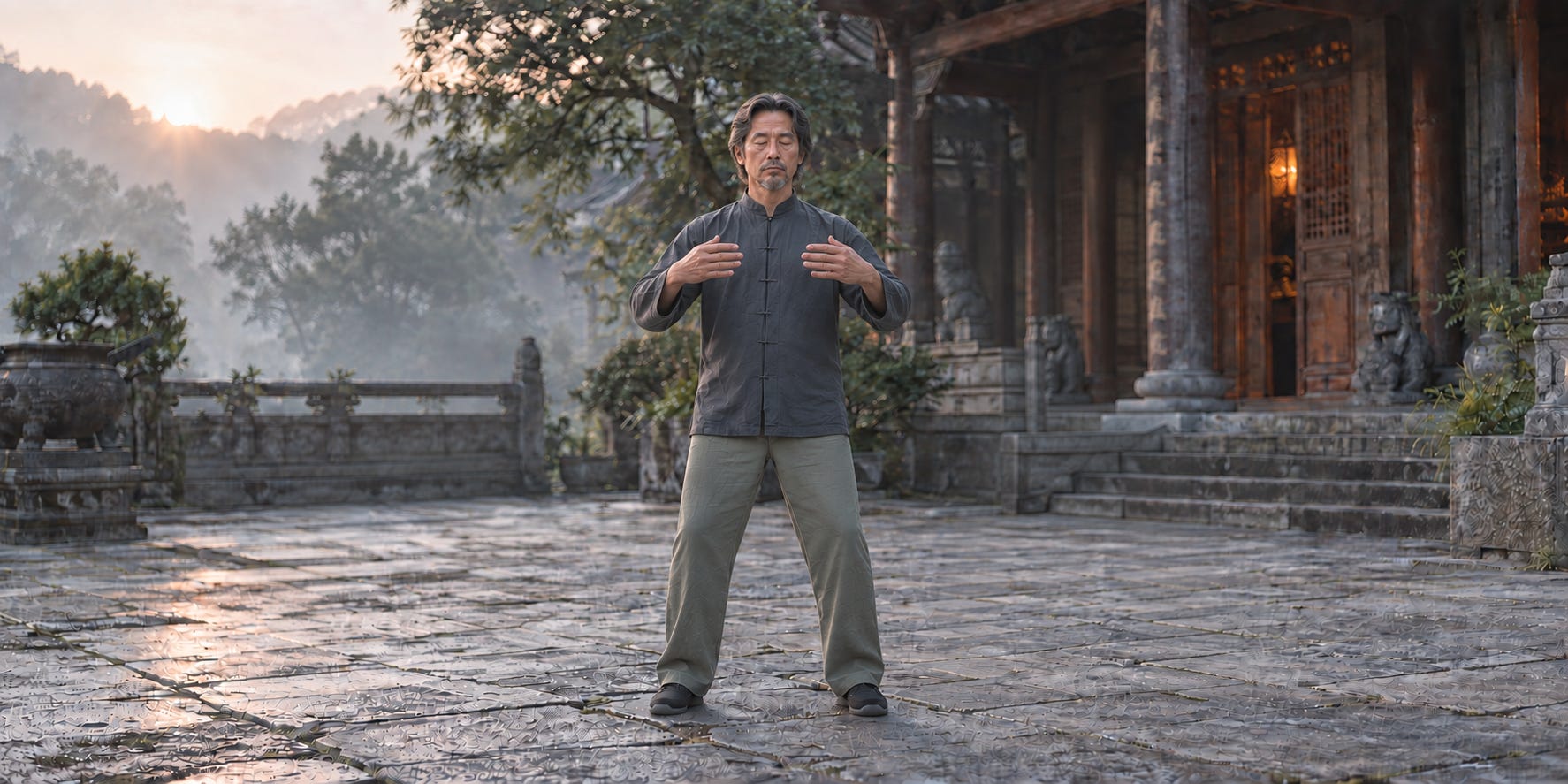
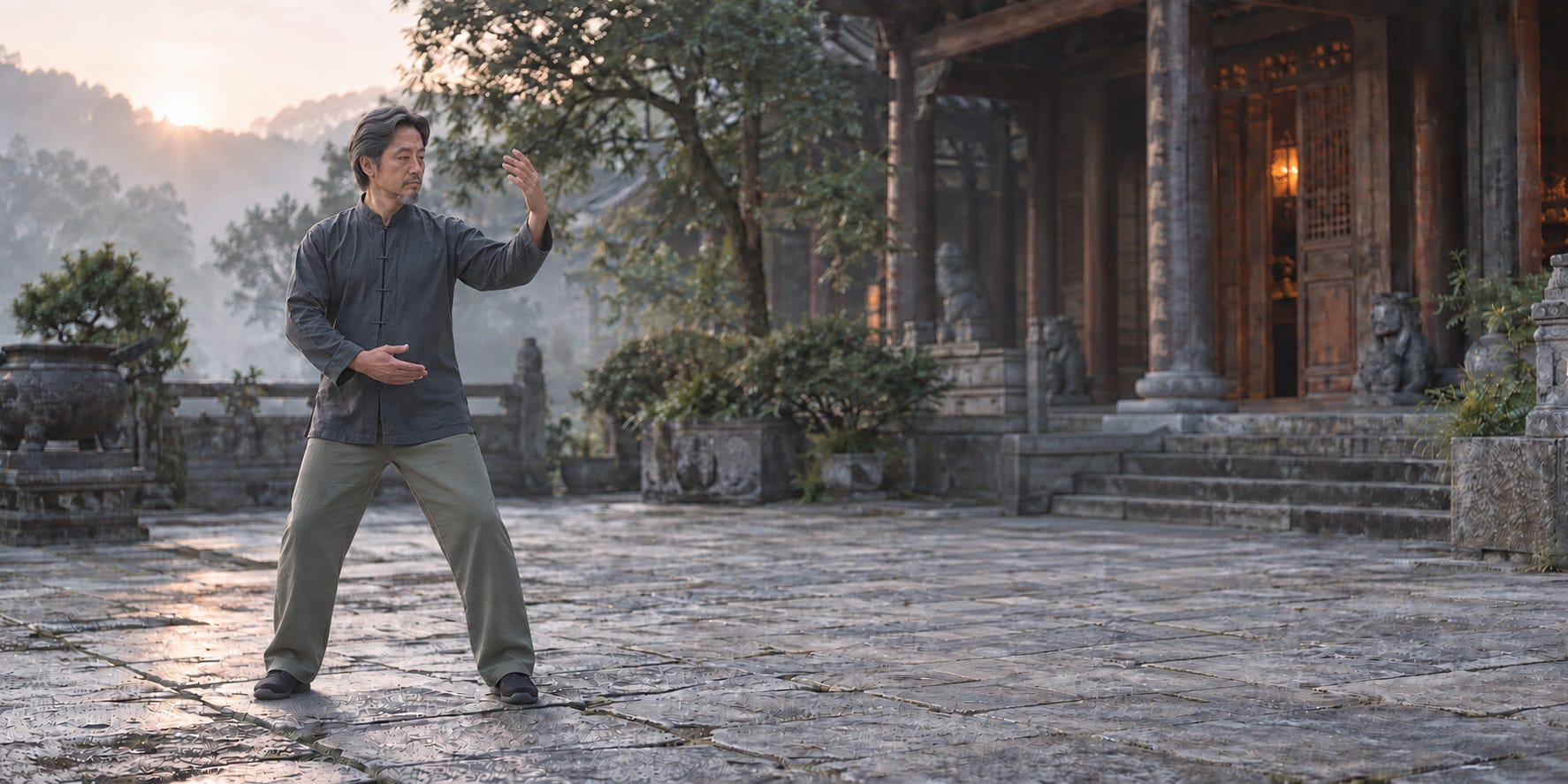
The Qigong sessions began and ended with five minutes of breath-focused meditation. Between these periods, participants performed seated exercises and standing movements such as Cloud Hands, Tai Chi Ruler, Rocking Chair, and Pushing and Pulling Space. As the study progressed, more time was devoted to standing practice.
One feature makes this intervention particularly interesting. The researchers added an eccentric muscular emphasis to some movements, asking participants to use deeper squats when appropriate. An eccentric contraction occurs when a working muscle lengthens under load, as the thigh muscles do while controlling the descent into a chair. This can challenge muscle at a relatively low metabolic cost, a sensible target for older men coping with fatigue or treatment-related weakness.
The control group performed light upper- and lower-body stretches while intentionally avoiding meditative or relaxation techniques. Its exercises also progressed over time.
The Results
Twenty-nine of the 40 randomized participants completed the intervention and post-treatment testing: 16 in the Qigong group and 13 in the stretching group. Retention was 80 percent with Qigong and 65 percent with stretching, a difference that was not statistically significant.
Attendance told a more striking story. The median Qigong participant attended 85 percent of classes, compared with 43 percent in the stretching group. The Qigong group also rated the sessions as more demanding: a median of 4.3 on a 0-to-10 perceived-exertion scale, compared with 2.6 for stretching. In other words, the Qigong was not merely quiet relaxation dressed in flowing movement. Participants experienced it as real exercise.
Fatigue was measured with the FACIT-Fatigue scale, on which a higher score indicates less fatigue. The Qigong group improved by a median of five points, while the stretching group’s median change was zero (p = .02). More importantly, 69 percent of Qigong completers improved by at least three points, the threshold used for a minimally important clinical change. In the stretching group, 38 percent reached it (Campo et al., 2014).
Qigong also produced greater improvements in anxiety (p = .003), somatic distress (p = .048), and global distress (p = .002). Depression moved favorably but did not reach significance. The calculated effects were large, although estimates from such a small pilot can be unstable.
Self-reported home practice did not differ significantly between groups and was not associated with improvement. Reporting compliance was poor, however, so this null finding is weak. The clearest difference in treatment exposure remained supervised class attendance.
These results support a measured conclusion: the program was feasible for the men who enrolled and completed it, and it showed a promising short-term benefit. They do not establish Qigong as a definitive treatment for cancer-related fatigue.
Why Might Qigong Help?
Traditional Qigong brings together regulation of the body, breath, and mind—tiao shen, tiao xi, and tiao xin. The study did not test these components separately, but the framework clarifies the possible mechanisms.
Regulating the body meant weight shifting, controlled knee and hip flexion, postural work, and gradually greater muscular demand. The eccentric emphasis may have trained the legs without the energetic cost of conventional aerobic exercise. More efficient movement could make daily tasks feel less exhausting, but the researchers did not measure strength, muscle mass, walking capacity, or balance.
Regulating the breath may have influenced arousal and emotional state. Slow, coordinated breathing creates a rhythm that can draw attention away from worry and symptom monitoring. The brief meditations may also have helped participants settle. Yet the trial did not record breathing rate, autonomic markers, sleep, or stress hormones, so no particular pathway was demonstrated.
Regulating the mind asks a person to attend to sensation, posture, timing, and direction without forcing the movement. For someone whose body has become associated with diagnosis and treatment, this may offer an experience organized around skill rather than illness. The reductions in anxiety and global distress fit that possibility, although mindfulness, self-efficacy, and expectations were not measured.
Together, Qigong can provide muscular work without a gym atmosphere and meditative attention without prolonged stillness. That combination may appeal to older adults who do not identify as exercisers.
What the Study Cannot Tell Us
The active stretching comparison is one of the study’s better features, but it did not create equal treatment exposure. Qigong participants attended roughly twice as many classes and reported greater exertion. Their better outcomes could therefore reflect the specific integration of movement, breath, and attention; a larger dose of supervised activity; more challenging leg work; greater enjoyment and expectancy; or some combination of these factors. The trial cannot separate them.
The analysis included only those who completed post-treatment testing. With 11 of 40 randomized men missing, the protection offered by randomization was weakened. The researchers found no obvious baseline differences between completers and dropouts, but the sample had little power to detect them. Outcomes were self-reported, participants could not be blinded, and follow-up ended one week after the program.
The sample was overwhelmingly White and non-Latino. Only 40 of 502 men invited entered the trial, often because of limited interest or time. The findings therefore apply most directly to older survivors willing and able to travel to a supervised program, and less clearly to men with metastatic disease, severe mobility limits, or limited access to care.
A Sensible Clinical Interpretation
For clinicians and Qigong teachers, this study offers a practical lesson. A program for fatigued older cancer survivors does not have to choose between being gentle and being physically meaningful. It can begin seated, progress gradually, and still include enough controlled loading to challenge the legs. Breath and attention can be woven into the movement rather than treated as optional decorations.
That said, persistent fatigue after cancer deserves medical assessment. Anemia, sleep disruption, depression, pain, medication effects, cardiovascular disease, and other conditions may contribute. Qigong should be considered supportive care, not a substitute for identifying treatable causes or for appropriate oncology follow-up. Men with balance problems, bone fragility, significant cardiovascular disease, or treatment complications may also need individualized modifications and medical clearance.
The strongest reading is that a carefully structured Qigong program was acceptable to many older prostate cancer survivors and produced short-term changes large enough to matter in daily life. The study also shows why Qigong interventions must be described precisely. Here, the treatment combined attention, breathing, flowing movement, and progressive eccentric leg work. Calling it simply “gentle exercise” would miss the point.
For men living in the long aftermath of prostate cancer, that integrated approach may offer something valuable: a way to rebuild capacity while also changing the felt experience of inhabiting the body. Campo and colleagues gave us an encouraging early signal. A larger trial with equalized attendance, objective physical measures, intention-to-treat analysis, longer follow-up, and a more diverse sample would tell us how much confidence that signal deserves.
Reference
Campo, R. A., Agarwal, N., LaStayo, P. C., O’Connor, K., Pappas, L., Boucher, K. M., Gardner, J., Smith, S., Light, K. C., & Kinney, A. Y. (2014). Levels of fatigue and distress in senior prostate cancer survivors enrolled in a 12-week randomized controlled trial of Qigong. Journal of Cancer Survivorship, 8(1), 60–69. doi:10.1007/s11764-013-0315-5

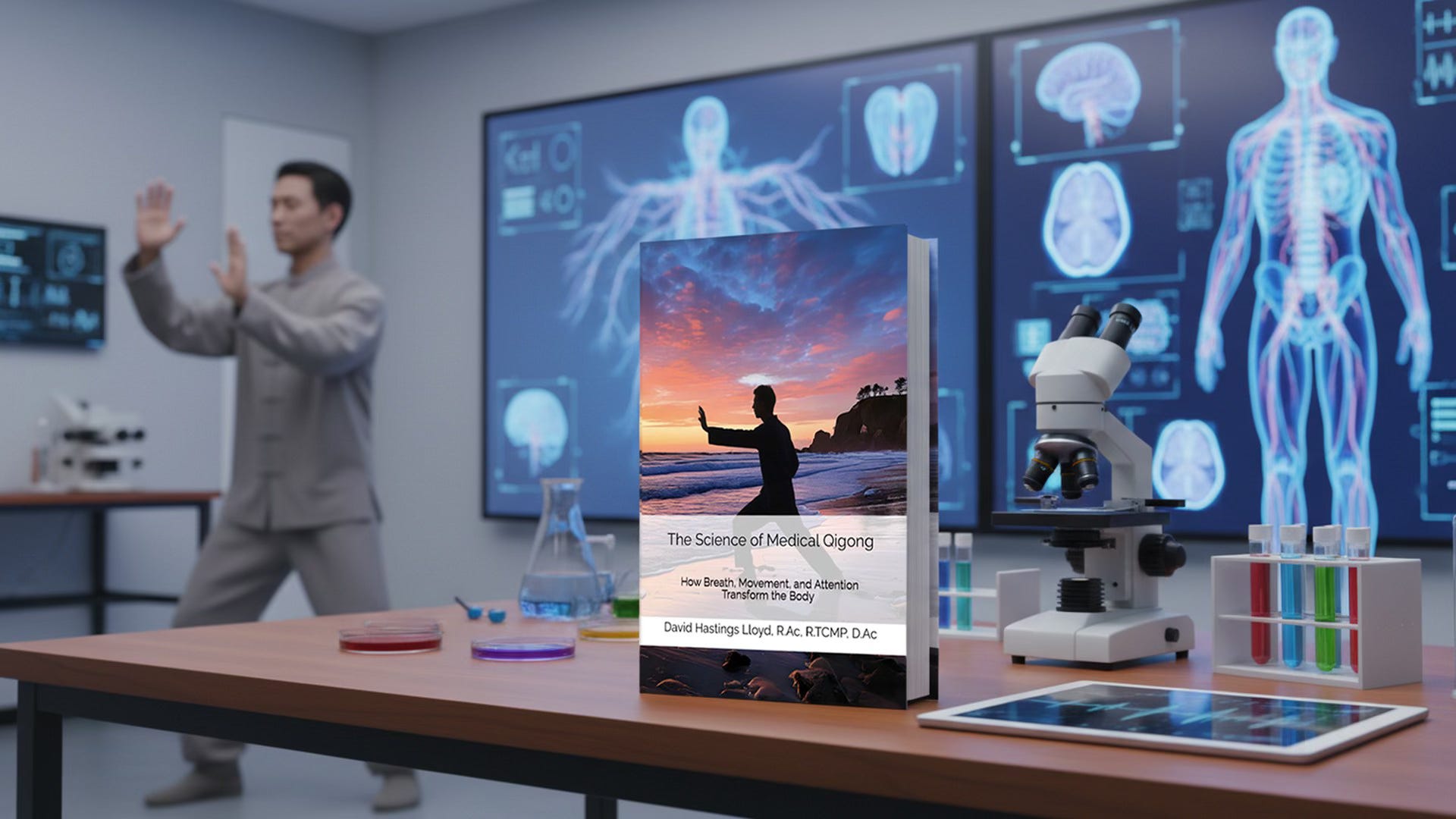
If this post resonated with you, you may enjoy my new book:
The Science of Medical Qigong: How Breath, Movement, and Attention Transform the Body
This book examines the growing body of scientific research exploring how Qigong practice influences human physiology. Drawing from clinical trials and experimental studies, it explains how coordinated breathing, posture, movement, and focused attention interact with the body’s regulatory systems.
The book explores research on:
• autonomic nervous system regulation
• cardiovascular function and blood pressure
• respiratory mechanics and lung capacity
• sleep quality and recovery
• inflammatory and immune signaling
• brain function and neural plasticity
• cognitive performance and mental health
Rather than presenting Qigong through mystical language, The Science of Medical Qigong approaches the subject through physiology, neuroscience, and clinical research, offering a clear explanation of how regular practice can influence the coordination and harmony of the body’s systems.
Available now in print and Kindle formats.
Click here to get your copy