

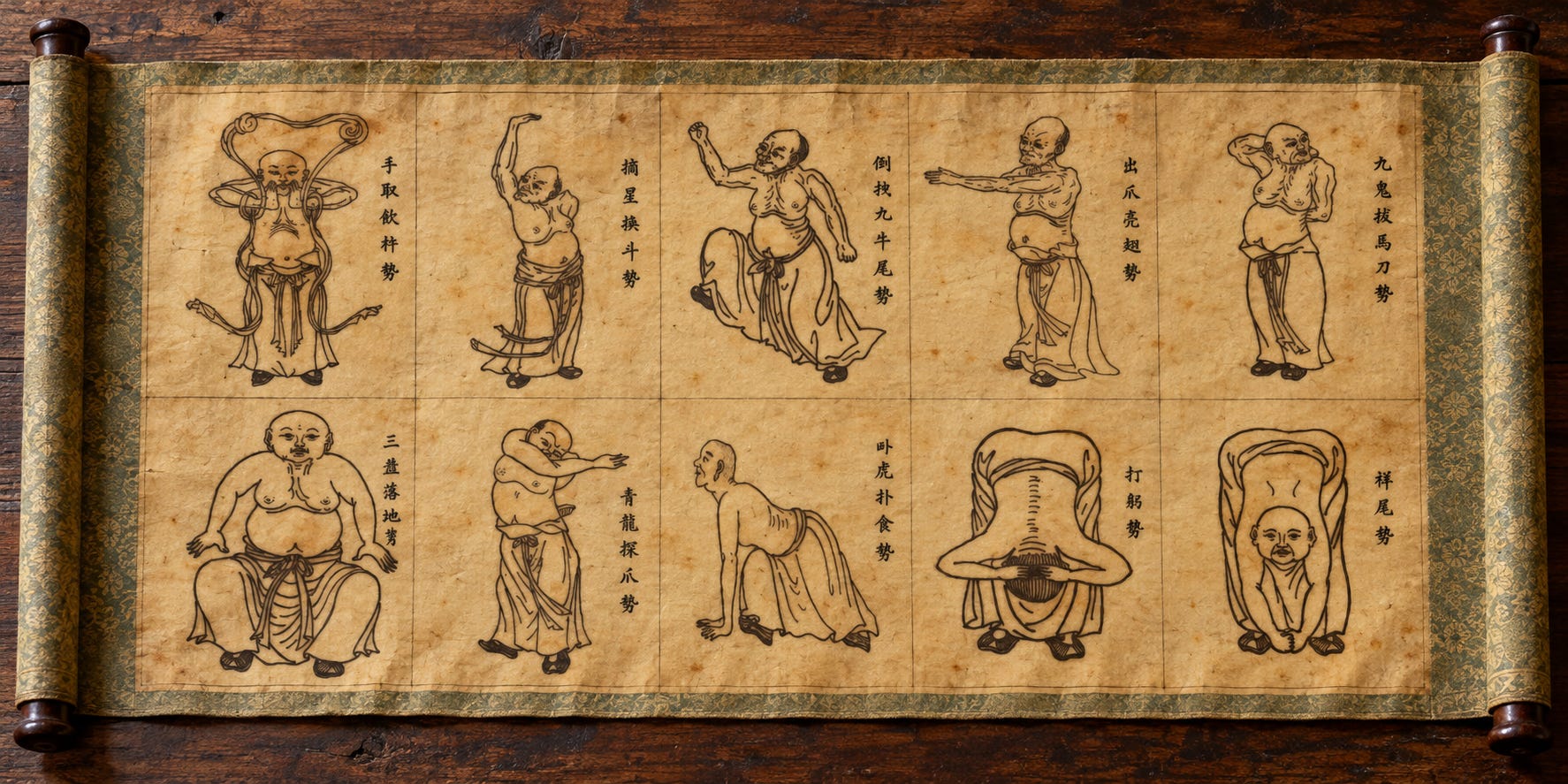
Resistance training strengthens muscles, and adequate dietary protein supports the rebuilding that follows. Tendons also adapt to repeated loading, changing the properties of the tissue that transmits muscular force to bone. For anyone practicing Yijin Jing, this nourishes the practical work of cultivation. The effort you put in during practice, and the food you eat between sessions contribute to the body’s development in different ways.
In the previous article on physical alchemy, we explored how muscles use fat and glucose to supply energy. Protein adds another part of that explanation. Digestion breaks dietary protein into amino acids, which your body uses to build and maintain its own proteins. Some become part of the machinery that produces muscular contraction; others contribute to the connective tissue through which that force acts.
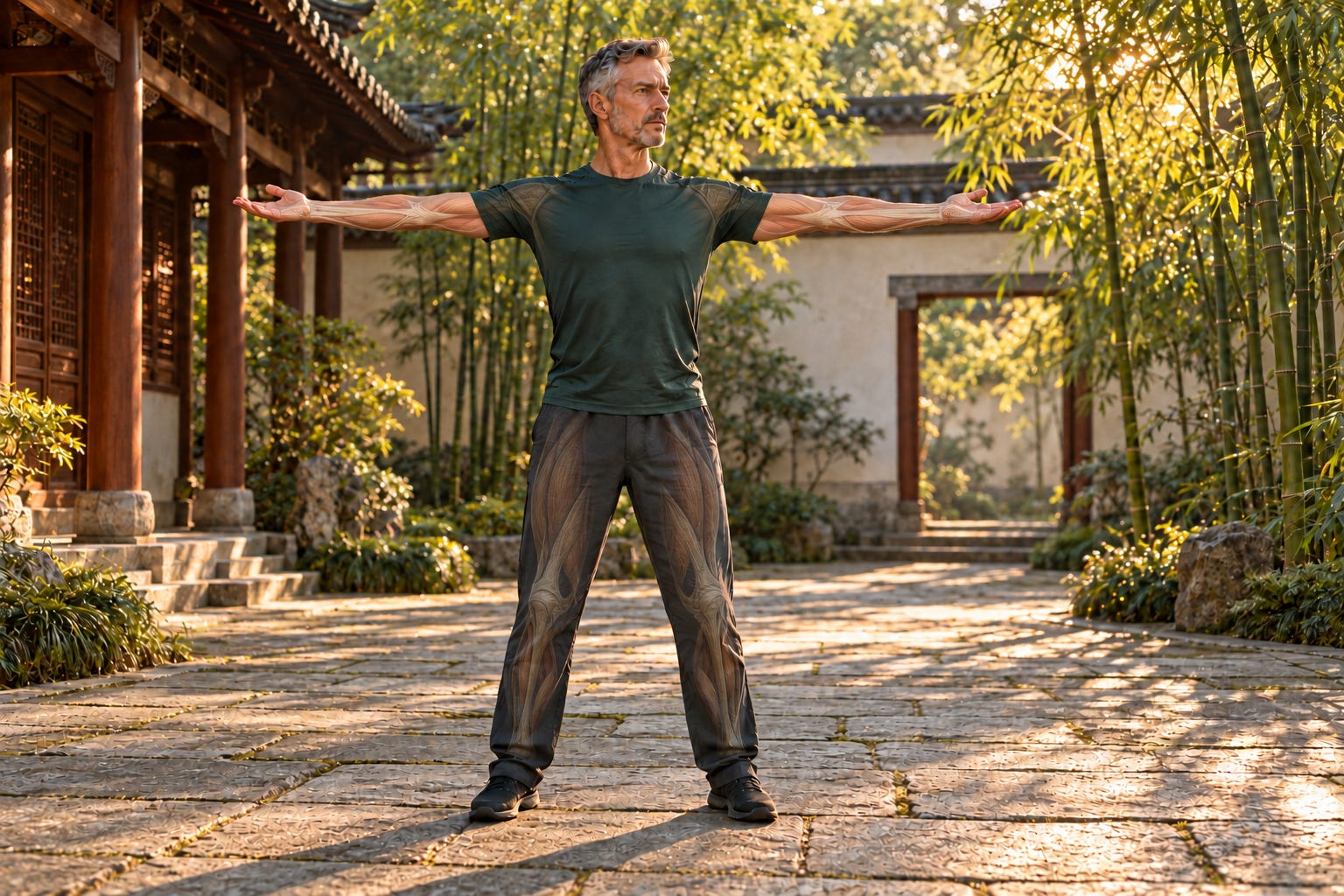
Muscles produce force, and tendons transmit it.
When you raise an arm, hold a stance, or press against resistance, your muscles generate tension. Tendons carry that tension to the skeleton. Although these tissues work together, they have different structures. Muscle contains the contractile proteins that generate force, while tendon is built largely from organized bundles of collagen.
Progressive resistance training can increase tendon stiffness and, to a smaller extent, its cross-sectional size. Here, stiffness means resistance to stretching under a given force. It describes a mechanical property of the tendon, distinct from the uncomfortable stiffness you might feel in a joint. Changes in this property affect how force is transmitted during movement. Tendon adaptation to mechanical loading
These changes develop through repeated training over weeks and months. The amount of force, how long it is applied, and how the training progresses all influence the response. This gives a practical reason to develop your practice gradually and consistently.
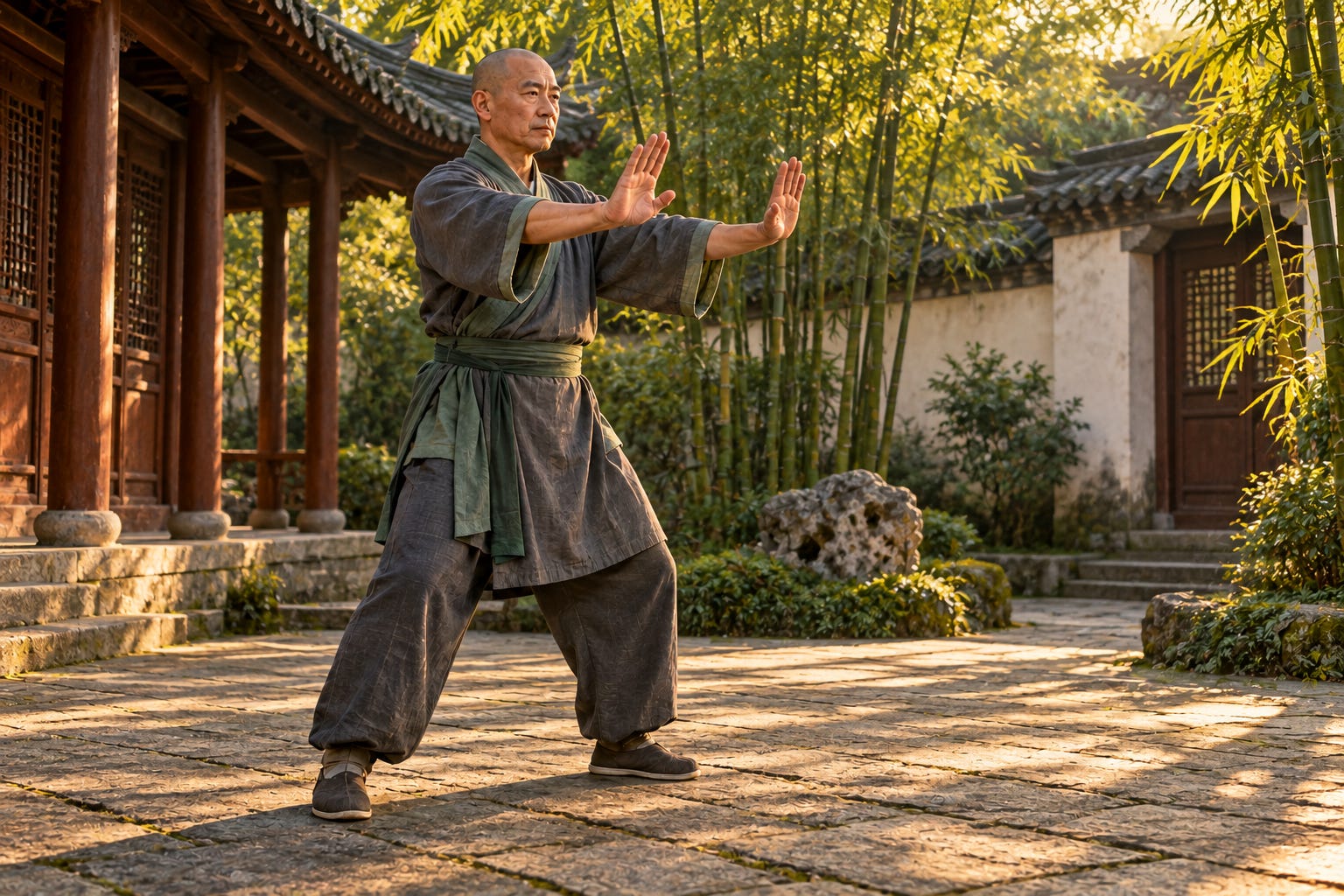
Protein supplies materials for muscular adaptation
Your muscles continually break down and rebuild proteins. Resistance exercise increases the rebuilding response, and dietary amino acids support it. Over time, an appropriate training program and sufficient nourishment can increase muscle size and strength.
A review of multiple resistance-training trials found that additional protein improved gains in muscle mass and strength. The average additional benefit for lean mass levelled off at about 1.6 grams of protein per kilogram of body weight per day. This is a useful reference point for adults training to build muscle, with individual needs varying around that estimate. Protein intake and resistance-training adaptations
For someone weighing 70 kilograms (about 154 pounds), that works out to roughly 112 grams of protein per day. This refers to the protein content of the food, not the food’s weight. Use food labels and a few days of meal logging to see how your usual intake compares. The calculation is most useful when considered alongside your training demands, age, and overall nutritional needs.
Make protein part of your regular meals.
Including a substantial protein source at breakfast, lunch, and dinner makes it easier to meet your daily needs. In a controlled feeding study, distributing protein more evenly across meals increased muscle protein synthesis over the day compared with concentrating most of the same daily amount at dinner. Protein distribution across meals
This deserves particular attention as you age. Older muscle can become less responsive to smaller protein servings. Research comparing younger and older men found that older men needed a larger amount relative to body weight to produce the greatest increase in muscle protein synthesis after a meal. The practical lesson is to look at how much protein your meals actually contain, especially if breakfast consists mainly of toast, fruit, or cereal. Protein requirements per meal with aging
Eggs, dairy foods, fish, poultry, meat, tofu, tempeh, beans, and lentils can all contribute. Plant-based eating can support muscular development when the overall diet supplies enough protein and essential amino acids. In young men beginning resistance training, a plant-based diet supplemented with soy protein produced similar muscle and strength gains to an omnivorous diet supplemented with whey when total protein intake was matched. Plant-based and omnivorous diets during training
Collagen has a different nutritional role.
Collagen is a protein, but its amino acid composition differs from the proteins commonly used to support muscle growth. It is rich in glycine and proline, contains relatively little leucine, and lacks tryptophan, an essential amino acid. This makes it a poor choice as your main protein source for muscle development.
In older women, whey stimulated muscle protein synthesis more effectively than collagen, both with and without resistance exercise. For muscle maintenance and growth, prioritize protein sources that provide adequate amounts of all essential amino acids. Whey and collagen compared
There are encouraging findings for tendons. A small, 12-week trial in middle-aged men found that adding collagen to a progressive resistance-training program produced greater increases in patellar tendon size and stiffness than training with a carbohydrate supplement. The patellar tendon connects the kneecap to the shinbone. The trial used 30 grams of hydrolyzed collagen after twice-weekly training sessions, and both groups received vitamin C. These findings suggest collagen may play an additional role alongside a structured loading program. Collagen and tendon adaptation
For everyday practice, begin with adequate food and an appropriate training stimulus. You can consider collagen as an additional supplement for a specific purpose, while your regular meals continue to provide the protein needed for muscle maintenance and growth.
Applying this to Yijin Jing
The relevance to Yijin Jing lies in the muscular work performed during the practice. Holding the arms away from the body, maintaining a demanding stance, or deliberately contracting against resistance loads muscles and their tendons. How those tissues adapt depends on the effort and how it progresses.
Resistance-training research helps explain these principles. Applying them to a particular Yijin Jing method depends on how you practice it. A gentle sequence and a demanding series of sustained contractions create different training demands. If your aim is greater strength, keep the work sufficiently challenging as your capacity improves.
Nourishment supports this process between sessions. Plan meals that provide enough protein, eat enough overall to support your activity, and allow recovery between demanding bouts of training. During practice, increase the demand gradually while preserving control and the intended posture. Over time, assess progress through what you can do: hold a position more steadily, manage a greater load, or perform the same movement with better control.
Like what you read? Keep exploring…

If this post resonated with you, you may enjoy my new book:
The Science of Medical Qigong: How Breath, Movement, and Attention Transform the Body
This book examines the growing body of scientific research exploring how Qigong practice influences human physiology. Drawing from clinical trials and experimental studies, it explains how coordinated breathing, posture, movement, and focused attention interact with the body’s regulatory systems.
The book explores research on:
• autonomic nervous system regulation
• cardiovascular function and blood pressure
• respiratory mechanics and lung capacity
• sleep quality and recovery
• inflammatory and immune signaling
• brain function and neural plasticity
• cognitive performance and mental health
The Science of Medical Qigong draws on physiology, neuroscience, and clinical research to explain how regular practice affects the body.
Available now in print and Kindle formats.
Have you considered having your ebook version of The Science of Medical Qigong: How Breath, Movement, and Attention Transform the Body available at bookshop.org for people who do not purchase from Amazon?