

Note: This post isn’t about debating the validity of Li Qing Yuen’s age. Instead, it’s a response to the many questions I’ve been asked over the decades as I’ve studied his story. Li Qing Yuen has been the subject of countless discussions across publications, internet forums, and YouTube videos. Here, I’ve aimed to compile some of the most authoritative information available. I also wanted to write something that wasn’t just a list of facts. I hope you find it intriguing.
Li Qingyun: The Life and Times of a 250-Year-Old Legend
Mountain journeys, Daoist teachers, and an elderly guest who wore out the officer sent to collect him.
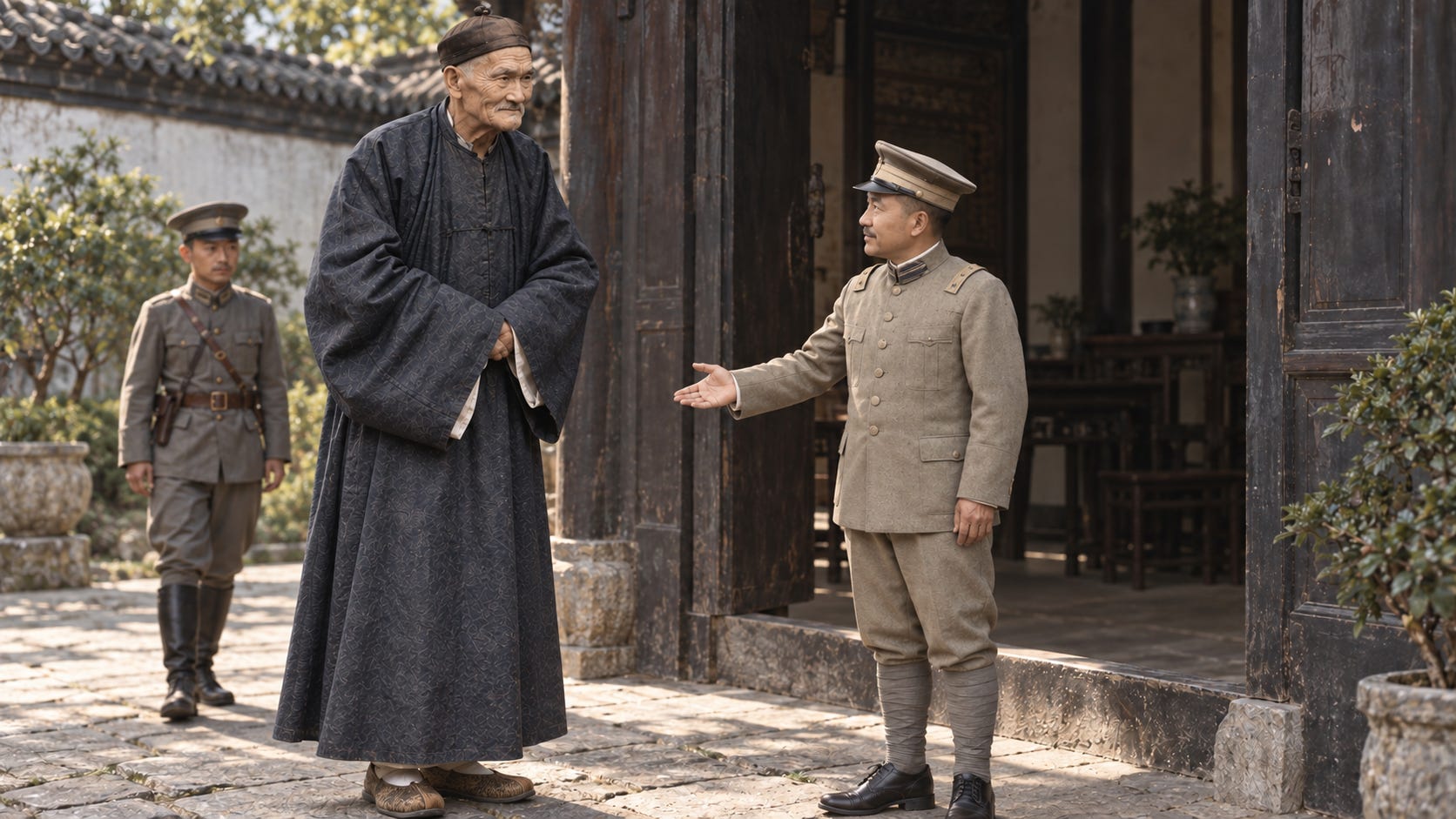
In 1927, General Yang Sen (楊森) arranged a sedan chair for an elderly guest. Men would carry him into Wanxian (萬縣), where a room had been prepared and the general would welcome him in person. The guest was Li Qingyun (李清雲), an herbalist from the mountains of Sichuan (四川), and according to the people who knew him, he was 250 years old.
Li declined the chair and set off on foot.
By the time the party reached town, the officer escorting him was exhausted. The journey was roughly thirty to thirty-five kilometers, and he had struggled to keep up. Yang asked what had happened. His officer explained that Li considered the walk good exercise for his muscles and bones. The old man stood nearby, smiling, apparently none the worse for the trip.
The general had arranged transportation for his elderly visitor. He now had a tired officer and a guest who seemed ready for the rest of the day.
Li, whose name also appears in English as Li Ching-yun and Li Qing Yuen, has everything an audience could want in a wandering Daoist: mountain adventures, medicinal plants, mysterious teachers, and powerful visitors hoping to discover his secrets. Some of the most enjoyable details, however, concern his appetite, his sense of humor, and his apparent indifference to becoming famous.
A Boy Leaves Home
When Yang asked about his birth, Li leaned toward the general’s ear and said he usually avoided discussing his age. Then he named the seventeenth year of the Kangxi emperor’s reign, corresponding to 1678.
That placed his childhood in the early Qing dynasty, more than two centuries before the Republic of China. Kangxi (康熙) still ruled an imperial court; by the time Li sat down with Yang, the last Qing emperor had abdicated. The empire ended in 1912.
Li described a family of modest means living in the mountainous country around Qijiang (綦江). He had received a few years of schooling and learned to read and write, but he liked climbing over ridges and exploring. At thirteen, he met three older herb gatherers who stopped near his home. They heard that the boy enjoyed the mountains and had little fear of wild animals. They suggested he come with them. He could collect medicinal plants and see something of the world at the same time.
It was an attractive offer for an adventurous boy. He accepted, beginning the wandering life that would occupy most of his story.
The work involved long stretches away from settlements. Li recalled traveling through western China, Tibet, and other distant regions, crossing mountains and rivers with his companions. They carried provisions, but sometimes ran short. They slept on the ground and dealt with bad weather and wild animals. Plants were their livelihood, and knowing where to find them determined where they went next.

The Wandering Herbalist
For his collecting trips, Li described carrying a small hoe, a sack, and a little food. He stayed in the mountains until he had gathered as much as he could carry, then brought the plants to a village market. Selling a load could provide enough money for several months of food. He gave some of what remained to poor people and elders.
When others questioned his generosity, his explanation was practical. The sack was heavy, his shoulders were tired, and he wanted to sell the herbs and put the load down. He needed little money himself. Someone else might have more use for it.
He could talk about centuries of mountain travel, then explain his finances in terms of getting a heavy bag off his back.
One encounter during those travels became closely associated with his reputation. Li described meeting an elder who moved across rocky ground with astonishing speed. He tried to follow and could not catch him. When they met again, Li asked how the man did it. The elder gave him wild berries called gou qi (枸杞), better known to English readers as goji berries or wolfberries. The medicinal fruit is also called gou qi zi (枸杞子).
Li said he began eating them regularly and credited them with helping him remain strong and tireless on long walks. The story has all the ingredients of a memorable mountain encounter: a stranger with remarkable abilities, a traveler trying to keep up, and a secret growing close to the ground.
Other herbs appearing in accounts of his work include he shou wu (何首烏), wild ginseng (ye shan shen, 野山參), and lingzhi (靈芝), the mushroom often called reishi in English. His reputation grew from this work with medicinal plants as well as from his teaching. Herbs gave him a livelihood, a reason to travel, and something useful to offer the communities through which he passed.
His recollections also included military service under Yue Zhongqi (岳鍾琪), an eighteenth-century Qing commander. Li told Yang that he eventually tired of military life and returned to gathering herbs. The mountains offered work he understood and the freedom to keep traveling. Along the way, he visited Daoist and Buddhist temples and met people who taught breathing, meditation, and methods of caring for the body.
Still Learning After a Hundred Years
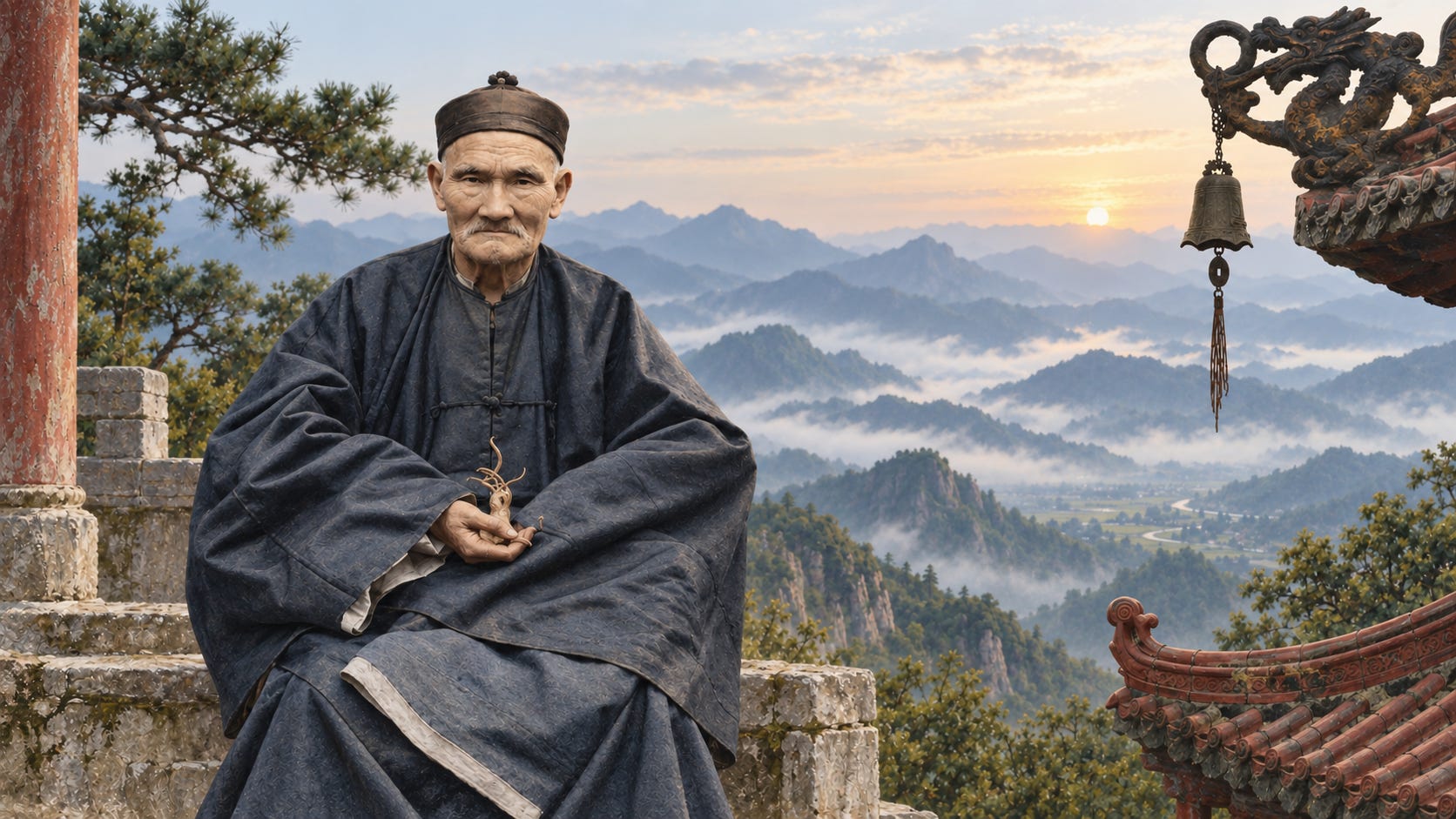
Li recalled being more than a century old when he met a Daoist teacher in the Kongtong Mountains (崆峒山). He was still asking about longevity.
The priest laughed at the question. He pointed to the life Li was already leading: gathering medicinal plants, living in the mountains, and spending time away from the disturbances of ordinary society. Li persisted, and the teacher eventually passed on verses and methods of practice. Li then traveled to Mount Emei (峨眉山) with a small group of apprentices, built huts, and began teaching.
He described remaining there for about a hundred years. Students gathered around him, and the wandering herbalist became a teacher in his own right. His days now included practicing what he had learned and passing it on. His teaching career alone would have counted as an exceptionally long life.
Beyond the mountain, emperors succeeded one another and the Qing dynasty approached its end. The accounts place Li’s return to Chenjiachang (陳家場), in Kai County (開縣), around the transition to the Republic in 1912. After all those years of travel and teaching, he settled into village life.
There, according to the officer who later introduced him to Yang Sen, Li still fetched water, gathered firewood, and cooked. Neighbors brought rice and other supplies, helped with household tasks, and provided clothing. He offered herbs and treatment in return. The villagers knew him as someone who came and went, sometimes disappearing into the mountains for long periods.
His family history had become difficult even for him to recount. In one conversation, he spoke of fourteen marriages and more descendants than he could remember. Long absences had left him out of contact with many of them. His family recollections also included loss: wives and children had died, generations had grown up, and the family had become too large and scattered for him to know everyone.
Generals, Scholars, and a Reluctant Celebrity
Yang Sen was one of several military figures interested in Li’s teachings. Another was Wu Peifu (吳佩孚), often called the “Scholar-Warlord.” Accounts of Li’s travels place him in Beijing (北京) in 1926 at Wu’s invitation and describe him teaching at the Beijing University Meditation Society.
The mountain herbalist was finding an audience among people whose lives were occupied with military affairs, scholarship, and public responsibilities. Wu welcomed him into his home, hoping to learn how to prolong his life. Li’s advice emphasized maintaining inward calm. Whatever demands the commander faced outside his door, he would also have to attend to the activity of his own mind.
By 1927, news of this remarkable elder had reached Yang Sen, whose officers were discussing health and longevity. Gui Yunjin described the man from his hometown. His own older relatives had known Li, he said, and had remembered him as already ancient. Yang wanted to meet him. The sedan chair was arranged, and Li walked into the general’s life.
Once he arrived, the problem became how to give him any peace.
People crowded around his lodgings. Officials wanted to speak with him, residents wanted to see him, and invitations kept coming. Yang tried to manage the visitors and allow Li to decide whom he would receive. Li disliked noisy city life and its endless social obligations. Wanxian was providing plenty of both.
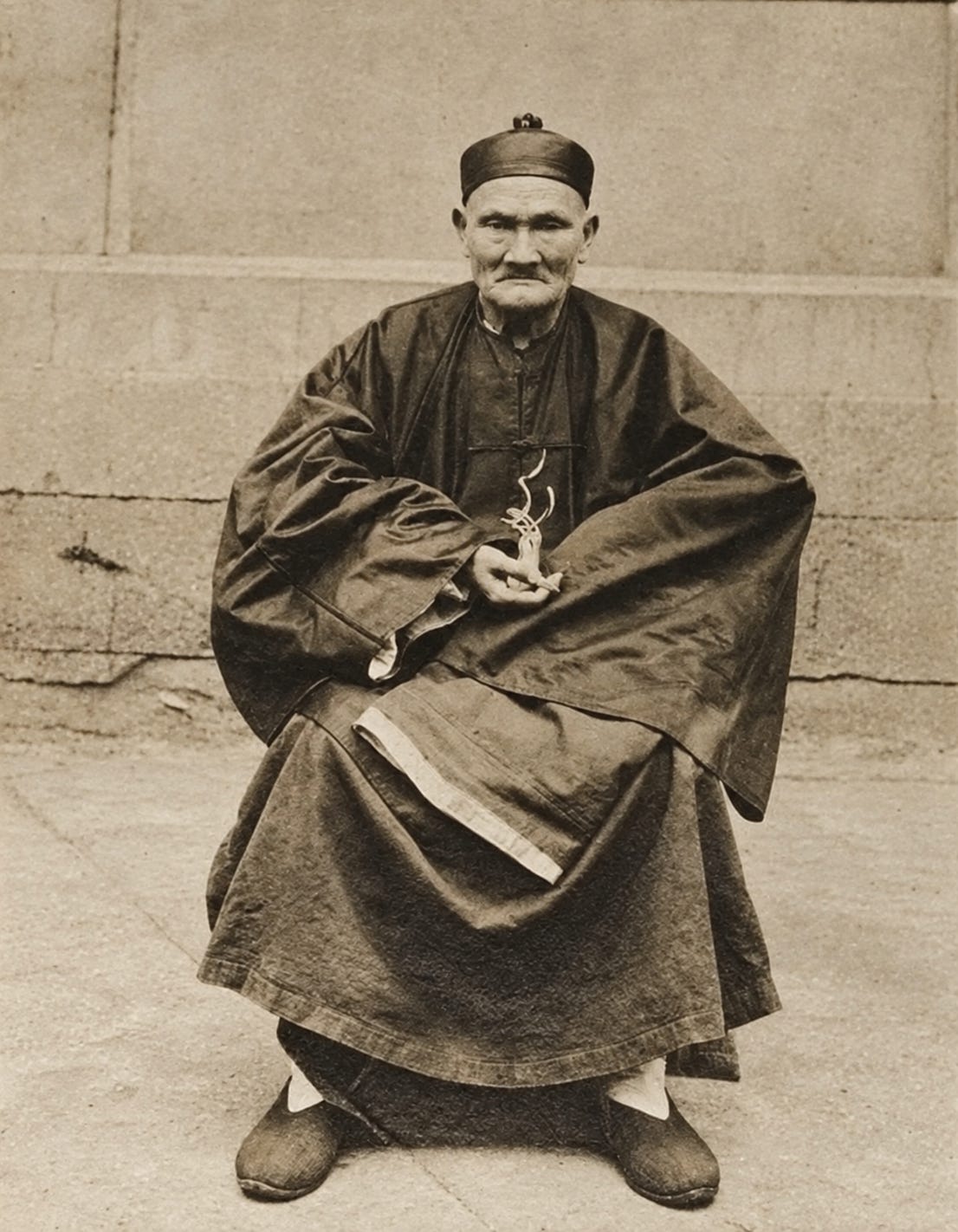
Those who met him described an imposing figure in loose clothing, with a ruddy face, bright eyes, and a strong voice. He wore a blue robe and straw sandals. His teeth were gone, and one of his fingernails had grown into a long curl. When he noticed Yang examining it, Li produced a small wooden box containing other long nails he had collected after they came off.
The nails became one of the most recognizable features of his portrait. During his visit, they also provided an unexpected moment between host and guest: the general noticed something unusual, and Li had a box ready to show him more.
At dinner, the conversation turned to food. Li ate slowly and enjoyed three large bowls of rice, along with a few slivers of lean meat. He said his usual meals consisted largely of vegetables, fruit, and rice. When Yang offered to obtain anything he liked, Li asked for rice cakes. The general promptly had some brought.
It is a pleasing detail amid so much talk of immortality. Offered the hospitality of a military commander, Li asked for rice cakes.
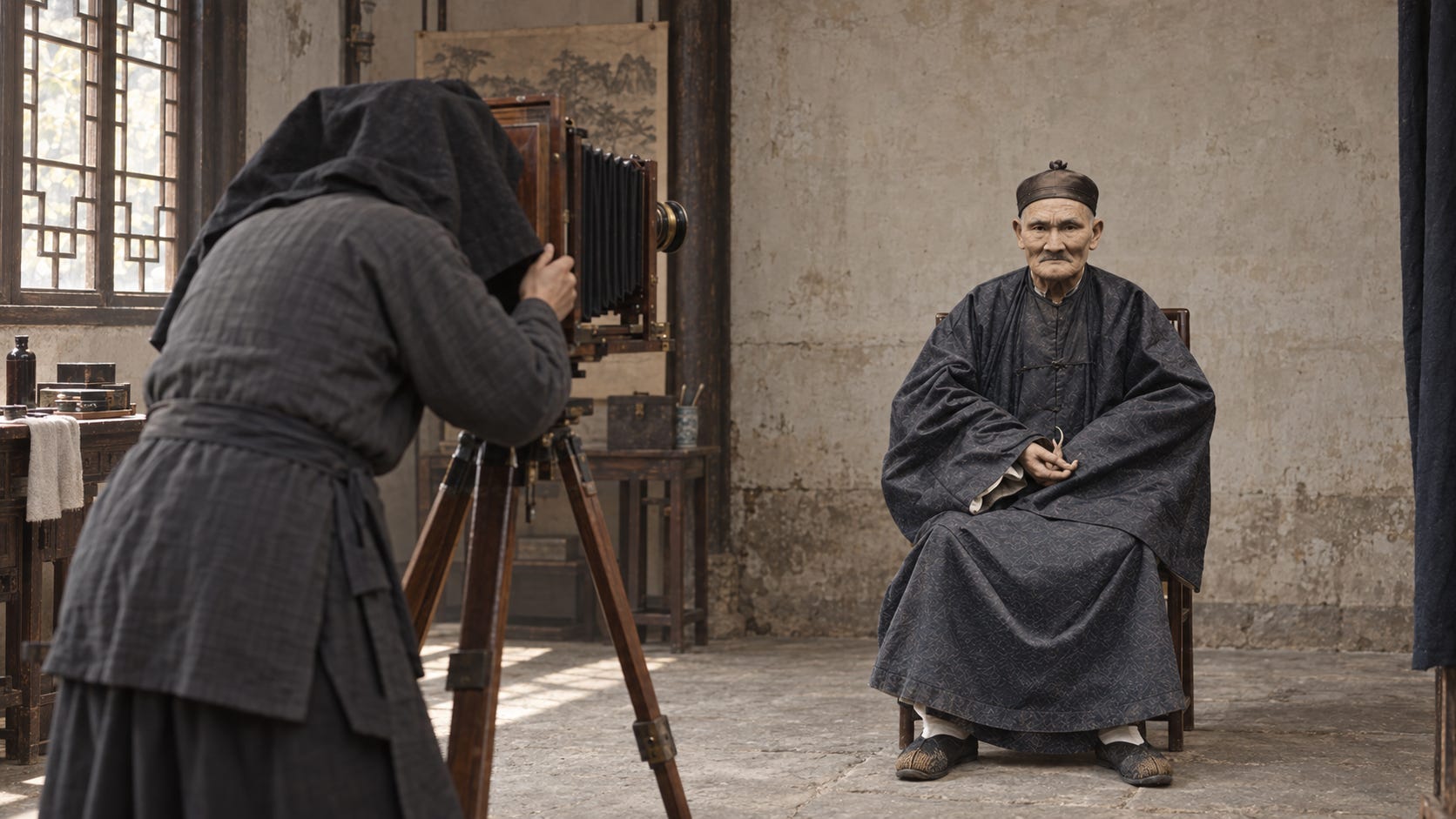
A local photography studio soon found a solution to at least some of the public demand. Its owner asked to photograph him. Yang thought displaying portraits would allow people to see the famous elder without everyone needing to visit his room. The studio took several photographs and put them in its window.
Crowds gathered there, too. People wanted copies. Requests reportedly arrived from Chinese living overseas, and the photographer made a small fortune. Li had spent much of his story avoiding worldly ambitions; someone else was now doing excellent business selling his likeness.
The portrait continued to travel. Yang later arranged for a photograph to be presented to Chiang Kai-shek (蔣介石), who expressed interest in meeting Li. Newspapers carried his story beyond Sichuan. A man who recalled setting out with a hoe and an herb sack had become a subject of international curiosity.
Breathing, Meditation, and the Six Healing Sounds
His visitors naturally wanted instructions. They asked what he ate and what practices he followed. Li’s answers repeatedly connected his way of life with the state of his mind.
He spoke of learning from Daoist and Buddhist teachers and described Daoism (道教), Buddhism (佛教), and Confucianism (儒家) as different approaches to cultivation. Breathing and meditation featured prominently. In one conversation, he emphasized breathing that was soft and smooth, without forcing. His teachings also discussed movement, rest, and the Chinese tradition of yangsheng (養生), or nourishing life.
For readers familiar with Qigong (氣功), much of this is recognizable. Physical practice belongs with attention to breathing and the mind. Li’s story gives those subjects a setting: years of walking, work with plants, periods of seated practice, and his repeated preference for mountain life over a crowded reception room.
The practices transmitted under his name include a seated form of the Eight Brocades, ba duan jin (八段錦). The movements have memorable names: the Heavenly Drum, Shake the Heavenly Pillar, and the Red Dragon Stirs the Sea. His commentaries describe a regular practice in which movement, breathing, and attention work together. The person who spent much of his life walking through mountains also made time for exercises performed while sitting.
These teachings use the Daoist language of the Three Treasures, san bao (三寶): essence, jing (精); vital energy, qi (氣); and spirit, shen (神). Through these terms, practitioners discuss the resources of life and their cultivation. Food, rest, physical activity, breathing, and the condition of the mind all have a place in caring for them.
The Six Healing Sounds belong to this approach. Also known as liu zi jue (六字訣), the Six Character Formula, this family of practices coordinates particular sounds with breathing and, in some versions, movement or posture. Within its traditional explanation, the sounds correspond to different organ systems. The method associated with Li combines the vocal sounds with specific bodily positions.
His wider teaching tradition also includes embryonic breathing, tai xi (胎息), and seated contemplative practice, often described more generally as quiet sitting, jing zuo (靜坐). These practices gave his pupils something to do each day. They could work with a movement, attend to their breathing, or sit and observe how readily the mind wandered.
Li’s ordinary activities supplied plenty of exercise beyond these formal methods. Gathering plants meant climbing, bending, digging, and carrying a load home. Village life involved fetching water, collecting firewood, and preparing food. His preference for simplicity still left him with a full day’s work.
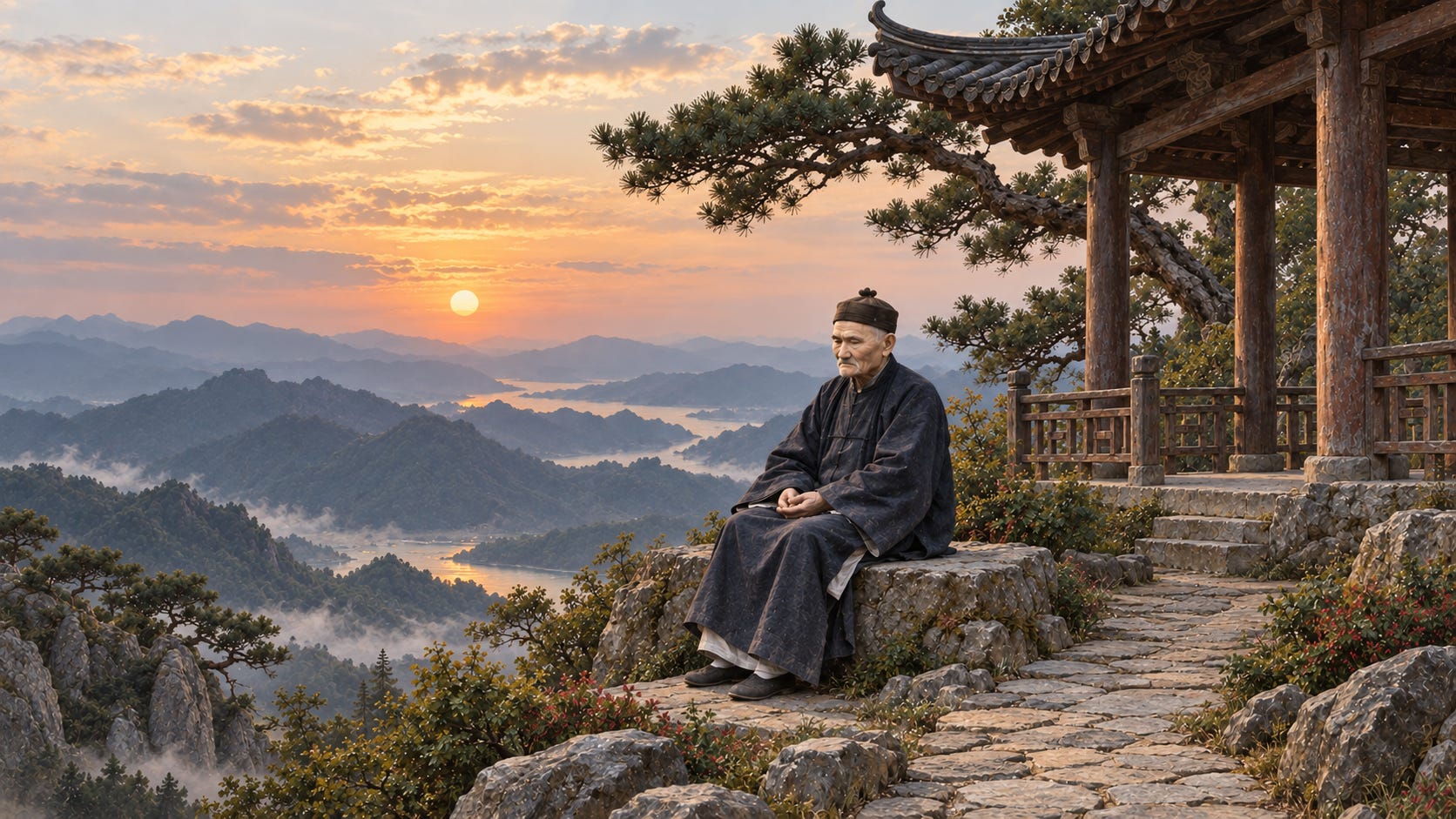
Keeping a Quiet Heart
The most memorable advice attributed to him brings several of these ideas together:
“Keep a quiet heart, sit like a tortoise, walk sprightly like a pigeon and sleep like a dog.”
The animals make the advice easy to remember. We can picture the composed tortoise, the lively bird, and the dog settling down to sleep. Keeping a quiet heart receives much more attention in the longer teachings.
Li’s discussion of regulating the mind, tiao xin (調心), describes a person repeatedly occupied with past pleasures, another troubled by envy, and someone else imagining future wealth or success. These are recognizable habits. A person can finish the day’s work and spend the evening mentally continuing an argument. Time set aside for rest can disappear into thoughts about what someone else has achieved.
The teachings associated with Li treat this continual agitation as something to address in daily life. They give considerable space to moderation, kindness, and restraint in speech. They discuss family members getting along and friends helping one another. Caring for life includes how we behave when we are hungry, disappointed, irritated, or eager to get our own way.
That is a demanding kind of practice. Learning an exercise gives us a clear task. Becoming less attached to a grievance requires us to notice how often we choose to revisit it. The work continues after the exercises are over, when we have to deal with the person who annoys us or a day that refuses to go as planned.
It also fits some of the less spectacular details of his biography. Li sold herbs, shared money he did not need, and received help from neighbors. Solitude mattered to him, but so did ordinary acts of assistance. His story gives room to both the wandering practitioner and the village elder whose neighbors brought him food.
Wu Wei and an Ordinary Day
The Daoist principle of wu wei (無為), often translated as nonaction or effortless action, appears in the teachings associated with Li. His discussion concerns the way desire, ambition, praise, and disappointment occupy the mind. A person can spend an extraordinary amount of effort pursuing approval or resisting circumstances.
In this setting, wu wei means letting go of that compulsive interference. Daily responsibilities still require attention. Li walked, gathered plants, cooked, taught, and dealt with visitors. The practice concerned how he approached those activities and how readily he could put them down when they were finished.
His teaching on simplifying daily activities follows the same direction. Adding more possessions, elaborate comforts, and occasions for display gives the mind more to manage. Simplicity leaves fewer unnecessary concerns competing for attention.
This gives practical meaning to his preference for the mountains. There was work to do, food to prepare, and a place to sit. In Wanxian, even a photograph of him drew a crowd.
Only Today Is Today
After reports of his death reached the international press in 1933, the photographs and sayings continued to circulate. Decades later, Yang Sen’s recollections helped introduce him to another generation of readers. His teachings found their way into books, classrooms, and the daily routines of people practicing Chinese medicine, Qigong, and Daoist cultivation.
Li remains easy to picture: the robe, the curled fingernails, the old face, and the suggestion that he might still be able to walk faster than the person asking his age.
Among the poems he is said to have enjoyed reciting is this line: “A life may last for a hundred years, but only today is today.” It is easy to hear those words from the man who took his time over dinner and asked for rice cakes. His visitors wanted to know how to acquire another century. Li, at least in that moment, was enjoying his evening.
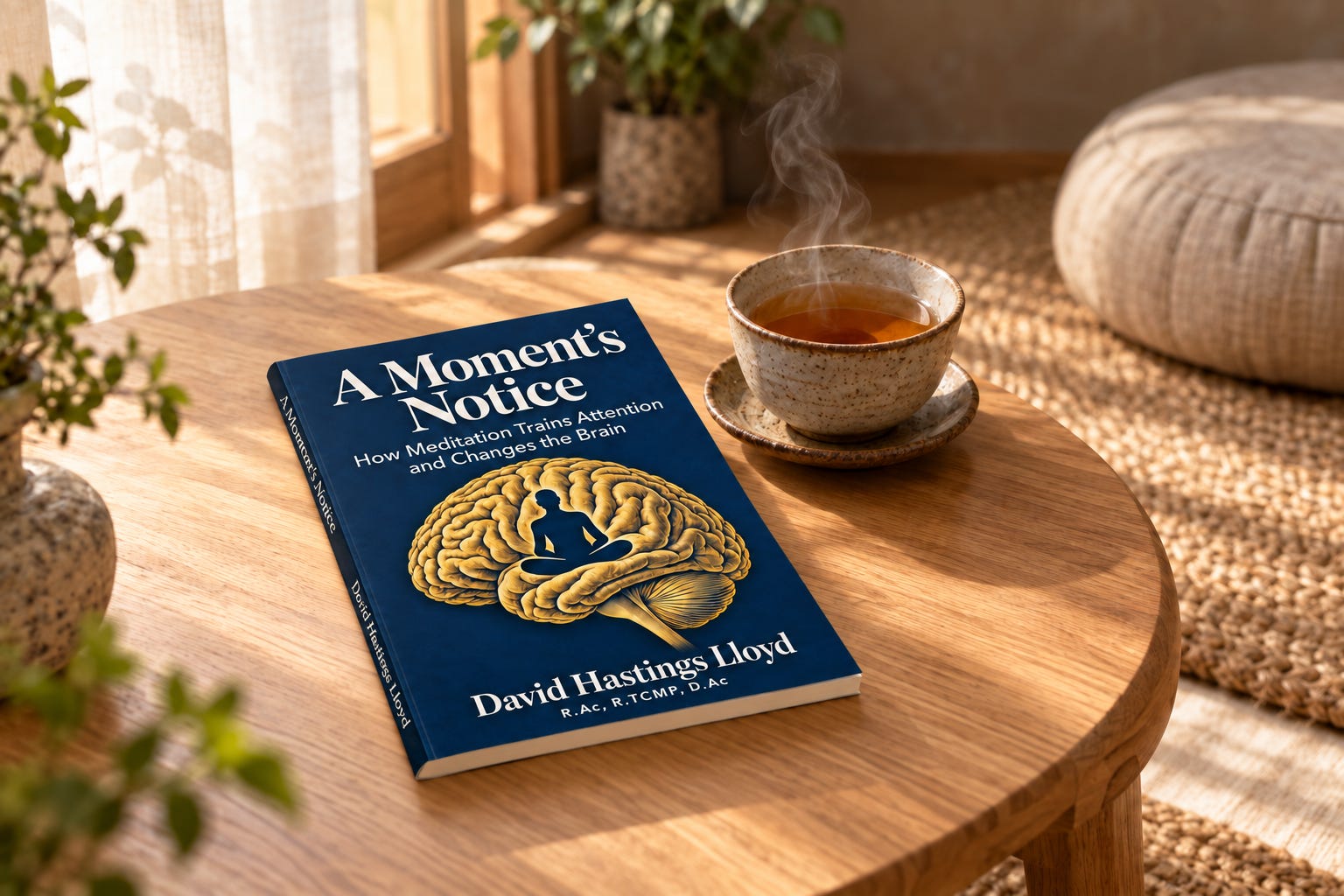
A Moment’s Notice: How Meditation Trains Attention and Changes the Brain
You sit down to follow your breathing, then discover that you are planning tomorrow or replaying a conversation. Recognizing that distraction and redirecting your attention are central to meditation practice.
In A Moment’s Notice, I explain what happens in the mind and brain as these skills develop. Drawing on neuroscience and clinical experience, I explore why attention wanders, how an urge can override an intention, and how practice helps you recognize familiar reactions before you act.
The book explores:
How meditation trains attention.
Why thoughts and emotional reactions become habitual.
How to work with persistent thoughts, strong emotions, and discomfort.
Why a difficult meditation session can still represent progress.
How to apply these skills in relationships, work, and everyday decisions.
The final chapter brings the ideas into a guided fifteen-minute practice, with practical instruction on posture, breathing, and working with distraction.
Whether you are beginning meditation or developing an established practice, the book helps you understand what you are training and how to practice with greater confidence.
Biographical sources
Yang Sen. The Immortal: True Accounts of the 250-Year-Old Man, Li Qingyun. Translated by Stuart Alve Olson. Valley Spirit Arts, 2014. Principal source for the biographical stories and teachings, especially pp. 37–58, 71, 83, 89–98, and 166–169.
Time. “China: Tortoise-Pigeon-Dog.” May 15, 1933.
North China Daily News. “250 Years Old.” June 5, 1928. Reproduced in The Immortal, beginning on printed page 58.
The New York Times. “Li Ching-Yun Dead; Gave His Age as 197.” May 6, 1933. Archived article listing.
Teachings and practice
Olson, Stuart Alve. Li Qingyun: Longevity Methods of a 250-Year-Old Taoist Immortal. CreateSpace Independent Publishing Platform, 2016.
Olson, Stuart Alve. Qigong Teachings of a Taoist Immortal: The Eight Essential Exercises of Master Li Ching-yun.Healing Arts Press, 2002.
Liu, Da. Taoist Health Exercise Book. Links Books, 1974. Revised and expanded edition, Paragon House, 1991.
Olson, Stuart Alve, translator. “The Tao of Longevity by Li Qingyun.” Sanctuary of Tao, October 25, 2022. Selection translated from the collection compiled by Yang Sen and Wang Chengsheng.
Sanctuary of Tao. “The Six Healing Sounds.” October 26, 2022.
Sanctuary of Tao. “Eight Brocades Seated Qigong and Longevity Methods of Li Qingyun.” Contemporary teaching materials.
Journal of Chinese Medicine. “Master Class: Healing Sounds Organ Detoxification Qigong.” Course description distinguishing the Li Qingyun and Hua Tuo traditions.
Historical and terminology references
National Palace Museum. “Selections: By Dynasty.” Historical reference for the Kangxi period.
Smithsonian National Museum of Asian Art. “Timeline of Chinese History, Art, and Culture.” Historical reference for the end of the Qing dynasty.
Hong Kong Department of Health, Chinese Medicine Regulatory Office. “Chinese Materia Medica Included in the Hong Kong Chinese Materia Medica Standards.” Reference for traditional Chinese herb names.
What a life. Great role model for me. The part that hit home for me is that living a very long life, which is what we all want, is still loaded with suffering, just more of it, and seeing my wife and kids develop deseases and suffer and die...is it really worth living forever? So today is forever, if I can see it.