

In a 2026 study published in Health Science Reports, Manzaneque and colleagues examined whether practicing Qigong for one month could alter immune biomarkers in individuals with fibromyalgia. The study focused on changes in white blood cells, lymphocyte subsets, immunoglobulins, and complement proteins in order to explore whether this form of mind–body training influences immune regulation in this population.
Fibromyalgia is a chronic pain condition that often includes fatigue, sleep disturbance, and cognitive complaints. Although the condition is widely recognized, its biological mechanisms remain unclear, and treatment options often provide only partial relief. Because inflammation and immune signaling have been proposed as contributors to the condition, understanding how immune parameters behave in people with fibromyalgia remains an important area of research.
Understanding the Condition
Fibromyalgia affects roughly two percent of the population and is characterized by widespread musculoskeletal pain accompanied by fatigue, sleep disturbance, and cognitive difficulties. These symptoms can severely reduce quality of life and often persist for many years. Researchers have long suspected that the immune system contributes to the condition, with studies examining cytokines, antibodies, and immune cell populations.
At the same time, behavioral interventions that combine movement, breathing, and attention have attracted interest as supportive therapies. Qigong is one such practice. It combines slow movements, relaxed breathing, and focused awareness. Previous research has linked Qigong practice to improvements in mood, stress, and physical symptoms across a range of conditions. However, relatively few studies have examined whether these practices influence immune markers in individuals with fibromyalgia.
The study by Manzaneque and colleagues addressed this gap by examining how a structured Qigong program affected several measurable immune parameters in this patient population.

What the Researchers Did
The researchers conducted an exploratory randomized controlled study involving women with physician-confirmed fibromyalgia. Participants were recruited from a fibromyalgia association in Málaga, Spain. The final sample consisted of 39 participants between 35 and 65 years of age. Sixteen individuals were assigned to the Qigong group and twenty-three to the control group.
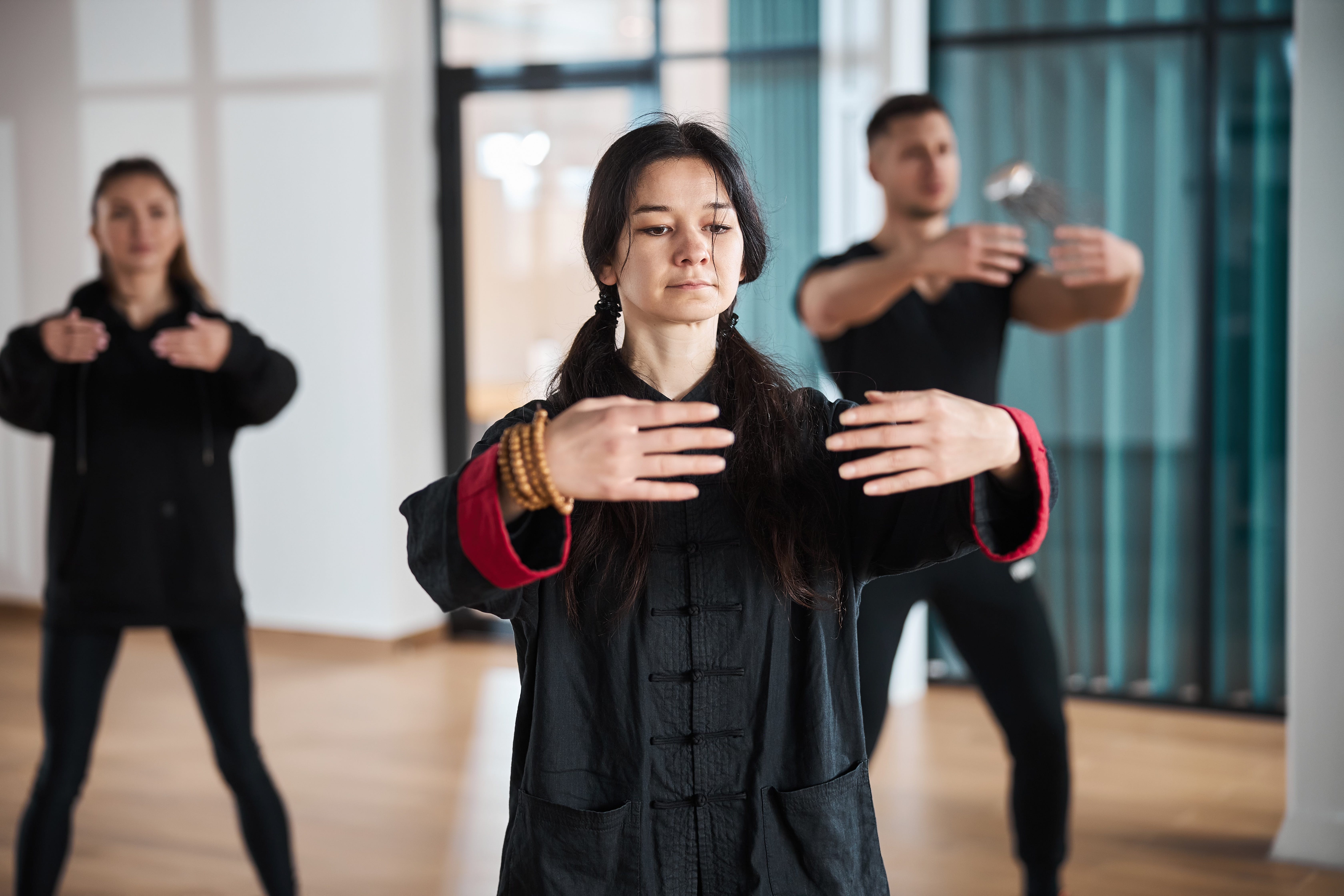
Participants in the experimental group completed a one-month Qigong program. Group training sessions took place three times per week and lasted approximately thirty minutes. The exercises consisted of a sequence of seven movements performed from a stable standing posture with the feet shoulder-width apart. The movements involved gentle stretching of the arms, trunk, and legs while maintaining natural breathing. Participants were also asked to practice the sequence at home once or twice per week.
The control group maintained their normal lifestyle and did not participate in Qigong or similar practices during the study period.
Blood samples were collected from all participants before the intervention and again after the four-week period. Researchers measured a broad set of immune parameters. These included total leukocyte counts, various leukocyte subtypes, lymphocyte subsets such as CD3, CD4, CD8, CD16, CD19, and CD45, as well as immunoglobulins and complement proteins.
Statistical analyses compared post-intervention immune values between the Qigong and control groups while accounting for baseline measurements.
What Changed
After four weeks of Qigong practice, several immune markers differed between the experimental and control groups.
Participants who practiced Qigong showed lower counts in several lymphocyte subsets, including CD3, CD4, CD8, CD16, and CD45. The percentage of total lymphocytes also decreased relative to the control group. At the same time, the percentage of CD19 cells increased in the Qigong group.
In addition to changes in lymphocyte subsets, the concentration of complement protein C3 increased in the experimental group compared with controls. Other immune markers, including immunoglobulins and several leukocyte types, did not show statistically significant differences between groups.
The pattern observed in the data reflects a shift across several immune markers rather than a change in a single variable. According to the authors, the consistency across multiple lymphocyte measures points toward a broad alteration in immune regulation following the Qigong program.
Mechanism / Interpretation
The authors interpret the results as evidence of immune modulation associated with Qigong practice in individuals with fibromyalgia. Several lymphocyte populations declined in number following the training period. At the same time, certain markers such as CD19 percentage and complement C3 moved in the opposite direction.
Fibromyalgia has been associated in previous research with altered immune signaling and inflammatory activity. Changes in lymphocyte populations therefore raise the possibility that behavioral practices influencing stress physiology and autonomic regulation may also influence immune balance.
The intervention itself combined coordinated movement, relaxed breathing, and focused attention. Practices that engage these components can influence physiological systems associated with stress regulation. Reduced sympathetic activation and changes in neuroendocrine signaling are known to affect immune cell distribution and activity. Within this framework, the immune shifts observed in the study can be interpreted as part of a broader physiological response to behavioral training.
The authors caution that the specific biological meaning of each immune change remains uncertain. The study identifies measurable alterations in immune markers but does not determine the precise mechanisms responsible for them.

System-Level Framing
The results of this study highlight the interconnected nature of several physiological systems involved in fibromyalgia. The condition involves chronic pain, disturbed sleep, fatigue, and psychological stress. These domains interact through regulatory systems that include the nervous system, endocrine signaling, and immune activity.
Changes in lymphocyte subsets and complement proteins reflect activity within the immune system. At the same time, behavioral interventions such as Qigong operate through coordinated body movement, breathing patterns, and attentional focus. These elements influence stress physiology and autonomic regulation.
Viewed from a system perspective, the immune changes observed in the study may represent downstream effects of regulatory adjustments occurring elsewhere in the body. The study therefore contributes to a broader view of fibromyalgia as a condition involving multiple interacting systems rather than a single isolated pathway.
Limitations
The authors describe several limitations that should be considered when interpreting the results. The study involved a relatively small sample of participants, and all participants were women. The intervention lasted only one month, which limits conclusions about longer-term effects.
The study was also exploratory in nature and measured a large number of immune variables. While several changes reached statistical significance, replication in larger samples would be necessary to confirm the findings. Finally, the biological meaning of the observed immune changes remains uncertain, and the study does not establish whether these shifts translate directly into clinical improvements.
Final Perspective
This study provides early evidence that a short period of Qigong practice can alter several immune biomarkers in individuals with fibromyalgia. The changes observed involved multiple lymphocyte subsets and complement proteins, suggesting that behavioral training combining movement, breathing, and attention may influence immune regulation in this population.
The findings do not establish a therapeutic mechanism or confirm clinical benefits on their own. However, they add to a growing body of research examining how structured mind–body practices interact with physiological regulatory systems. In the context of fibromyalgia, where biological mechanisms remain only partially understood, studies of this kind provide useful data linking behavioral interventions with measurable changes in immune activity.
Further research with larger samples and longer interventions will be required to determine how these immune changes relate to symptom improvement and long-term disease management.
Reference
Manzaneque, J. M., Vera, F. M., Rodriguez-Peña, F. M., Sanchez-Montes, S., & Blanca, M. J. (2026). Immune biomarkers in fibromyalgia after a qigong programme: An exploratory randomized controlled study. Health Science Reports, 9, e72164


Like what you read? Keep exploring…
If this post resonated with you, you may enjoy my new book:
The Science of Medical Qigong: How Breath, Movement, and Attention Transform the Body
This book examines the growing body of scientific research exploring how Qigong practice influences human physiology. Drawing from clinical trials and experimental studies, it explains how coordinated breathing, posture, movement, and focused attention interact with the body’s regulatory systems.
The book explores research on:
• autonomic nervous system regulation
• cardiovascular function and blood pressure
• respiratory mechanics and lung capacity
• sleep quality and recovery
• inflammatory and immune signaling
• brain function and neural plasticity
• cognitive performance and mental health
Rather than presenting Qigong through mystical language, The Science of Medical Qigong approaches the subject through physiology, neuroscience, and clinical research, offering a clear explanation of how regular practice can influence the coordination and harmony of the body’s systems.
Available now in print, Kindle, and audiobook formats.
Click here to get your copy on Amazon
The assumption is that what you're doing is bona fide qigong work/exploration. How do we know that? The qi has some pretty obvious physical manifestations, such as jin skills, qi-tensile-integrity displays, etc. I'd expect some discussion of tangible qi development before hearing just the vague assertion that what you're studying has to do with the qi itself. 2 cents.