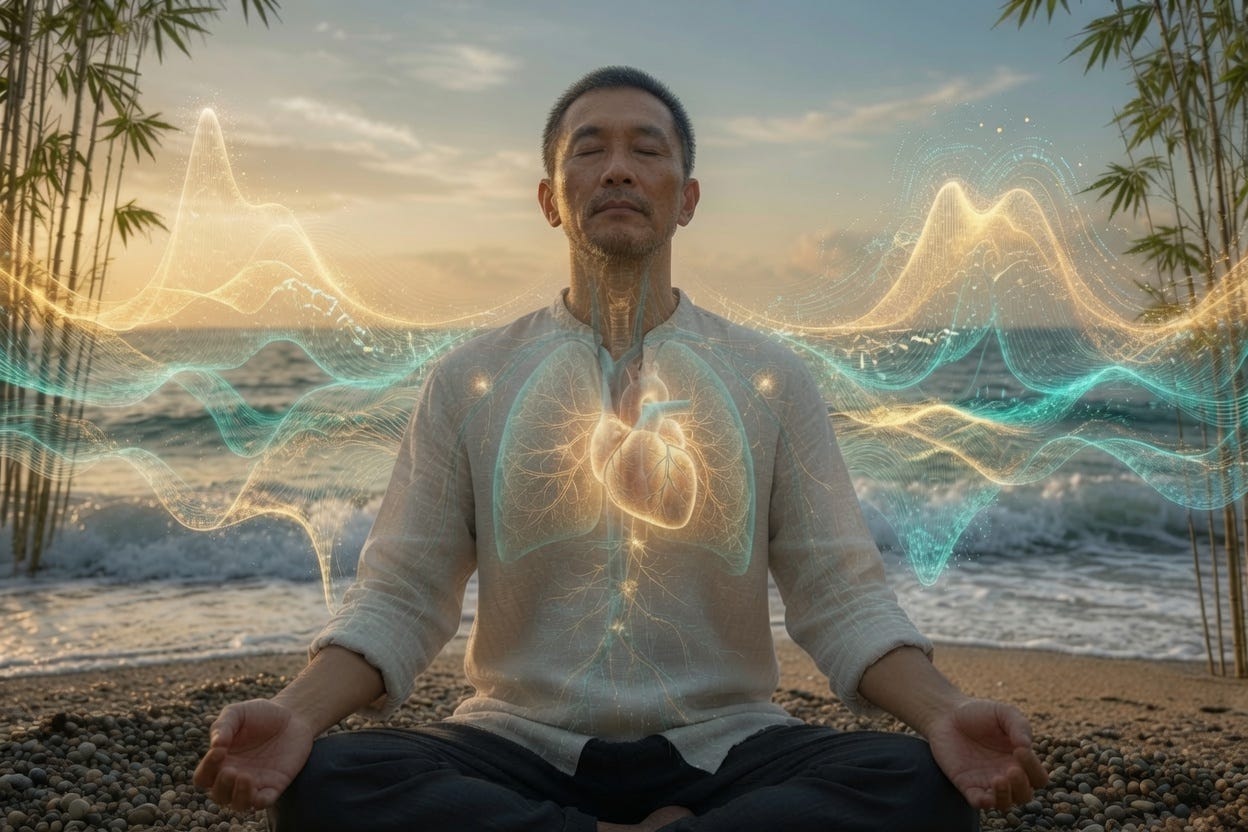
Cyclic Sighing: A Simple Evidence-Based Practice for Rapid Stress Relief and Nervous System Regulation
Life can get overwhelming. If you’re anything like me you plate is full before you wake up. Going to the gym/training, dealing with creative challenges and dealing with difficult people all add up. It literally makes you want to sigh. Well, there’s good news. You can utilize that sigh as a form of stress relief.
Cyclic sighing is a great way to use the body’s own natural impulse to sigh to calm the nervous system and lift your mood. The best part is you can do it anywhere, any time, for almost instant stress relief.
How to Practice Cyclic Sighing
Take a deep inhale through the nose and fill your lungs most of the way up. Add a short second inhale through the nose to top them up completely. Then let of your breath out in a long, smooth exhalation through the mouth that lasts longer then the two inhales combined.
Repeat that cycle for about 5 minutes. You can also just do shorter rounds of several breathing cycles to quickly reset your system. Don’t worry too much about exact timing, though it does help to get into the swing of things. The key is an extended exhalation. You can practice this technique in any position: seated, standing, or lying down. This method also integrates seamlessly with Qigong practice.
How It Works
Cyclic sighing takes advantage of the body’s own natural reset mechanism. There is a reason why you sigh when you need to refocus. The double inhalation fully expands the lungs and reinflates collapsed alveoli, which improves oxygen exchange and helps it pass more effectively into the bloodstream. The longer exhale clears out excess carbon dioxide and strongly activates the parasympathetic “rest and digest” response through the vagus nerve. This swiftly reduces the stress response while promoting a sense of calm and emotional balance.
The Science Behind Cyclic Sighing
This breathing practice has strong support from well-designed research. A 2023 randomized controlled trial at Stanford University analyzed subjects practicing various breathing techniques and mindfulness meditation. Cyclic sighing ended up as the most effective method studied. It produced the largest improvements in positive mood and the largest reduction in resting respiratory rate physiological arousal, when compared to the other methods. These methods appeared both immediately and added up cumulatively over the month-long study.
This fits with the broader evidence on slow breathing and sighing enhancing vagal tone, improving lung function, and aiding emotional regulation. These findings also align with ancient Qigong principles of breathing to improve Qi flow and modern understandings of neurophysiology.
Practical Benefits
With regular practice, cyclic sighing becomes a reliable ally for dealing with acute stress and anxiety. It supports faster mental recovery between tasks, improves sleep quality, and strengthens overall emotion resilience. It can be used for a quick reset during the day, a way to let go of the day’s demands in the evening, and a way to manage mental health challenges.
It’s a simple method that can deliver a genuine impact. It’s easily accessible, with a solid evidence base to back up its benefits. Give it a try for a week or two. Notice the way your energy shifts, how much calmer you feel, and how much better you can handle mental challenges when they pop up.
The Inner Resonance Breathing and Meditation App
My new science-backed breath work and meditation app is now live as a web-based app.
I built it using my time as a Qigong teacher (25 plus years) and blended it with peer-reviewed insights from neurology, immunology, and cellular health. Inner Resonance delivers targeted breathing methods and guided sessions to support: nervous system balance, sleep, focus, and everyday resilience.
You get progress tracking, streaks, and more. You can use it on your phone, tablet, and laptop. So, you can practice wherever life takes you. It also comes with a free 7 day trial, no payment information required. I created this as a practical tool for genuine change. It has always been my dream to take Qigong and breathing’s benefits to the general public, so that others can gain the benefits that I have over the years.
Try Inner Resonance here
References
Balban, M. Y., Neri, E., Kogon, M. M., Weed, L., Nouriani, B., Jo, B., Holl, G., Zeitzer, J. M., Spiegel, D., & Huberman, A. D. (2023). Brief structured respiration practices enhance mood and reduce physiological arousal. Cell Reports Medicine, 4(1), Article 100895. LINK
Russo, M. A., Santarelli, D. M., & O’Rourke, D. (2017). The physiological effects of slow breathing in the healthy human. Breathe, 13(4), 298–309. LINK
Zaccaro, A., Piarulli, A., Laurino, M., Garbella, E., Menicucci, D., Neri, B., & Gemignani, A. (2018). How breath-control can change your mind: A review on psycho-physiological correlates of slow breathing. Frontiers in Human Neuroscience, 12, Article 353. LINK


