

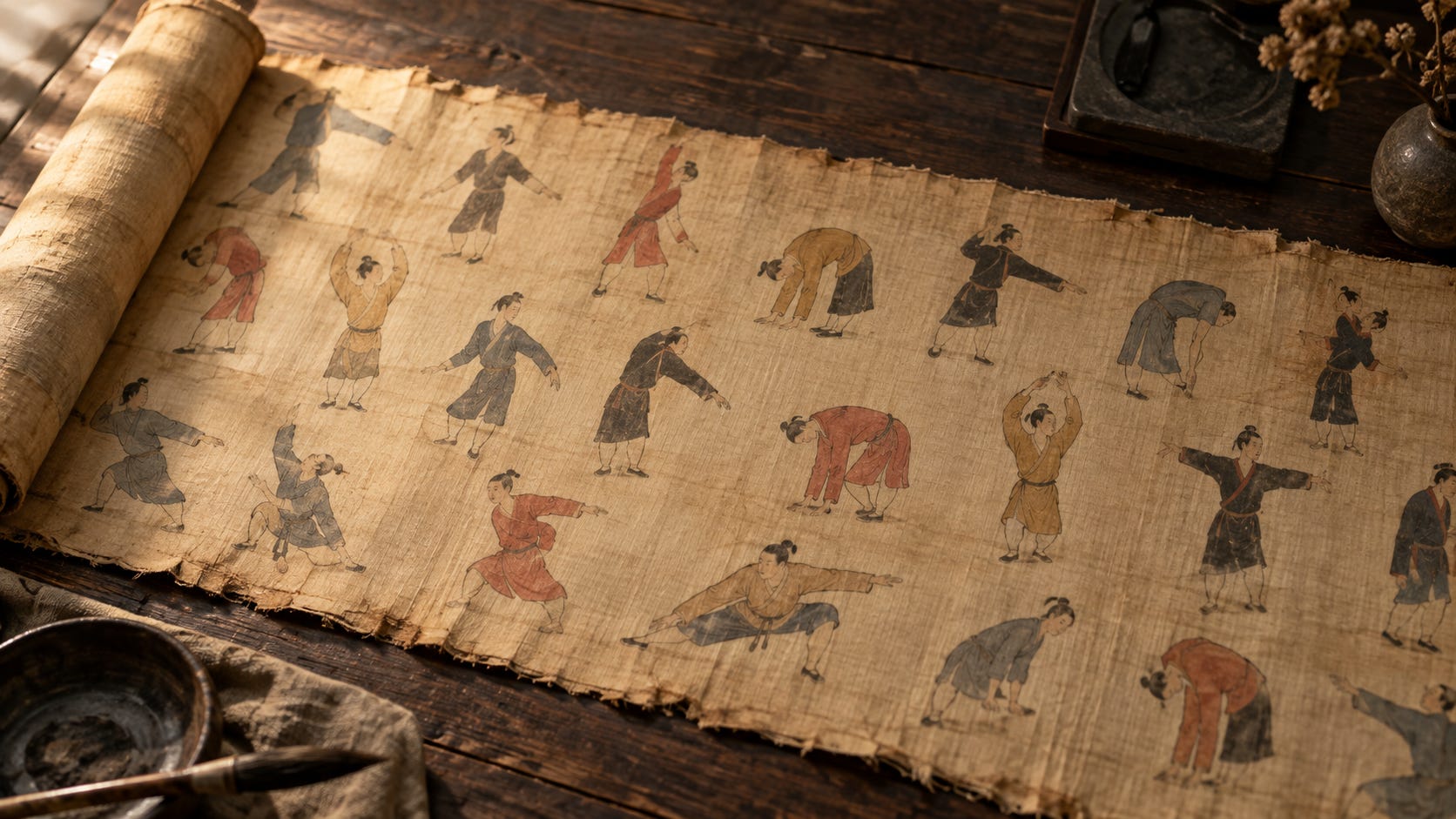
People in China were using movement and breathing exercises to care for their health more than two thousand years ago. A silk chart excavated at Mawangdui in 1973 comes from a tomb sealed in 168 BCE. It depicts forty-four figures performing exercises. Today, we recognize this chart as evidence of Daoyin (導引), one of the principal predecessors of Qigong (氣功) (Yang, 2018).
The history of the name Qigong is much more recent. Although the word appeared in earlier writings, it became widely established during the twentieth century as a shared name for Chinese practices involving movement, breathing, and meditation (Palmer, 2005).
How Qigong Got Its Name
Qigong brings together two Chinese terms. Qi (氣) carries meanings that include breath and vital energy in traditional Chinese thought. Gong (功) refers to work or skill developed through practice. “Working with qi” is a useful starting translation (Dorcas & Yung, 2003; Yang, 2018).
The term itself is much older than its modern usage. The characters for Qigong (氣功) appear in early Daoist literature, including the Yunji Qiqian (雲笈七籤), compiled around 1029 CE by Zhang Junfang. Another occurrence appears in the Jingming Zongjiao Lu (淨明宗教錄), traditionally attributed to the Jin dynasty Daoist Xu Xun (239–374 CE). This would place the term’s origins as early as the fourth century, although the attribution and dating remain contested (Zhang, ca. 1029; He, 2020).
The decisive period for the modern name “Qigong” began in the late 1940s. Liu Guizhen, a Communist Party official in Hebei, reported recovering his health after learning a traditional breathing method. His superiors asked him to investigate its therapeutic use. Liu and his colleagues adopted the term Qigong for their work, and during the 1950s it gained recognition within the development of modern traditional Chinese medicine, with dedicated clinics (Palmer, 2005).
Nourishing Life Through Movement
Long before Qigong became a common name, yangsheng (養生), usually translated as “nourishing life,” provided a broader approach to caring for health. Movement and breathing exercises belonged alongside everyday habits involving food, rest, and other aspects of life. These methods addressed health and longevity, often within a larger understanding of how human life related to the natural world (Kohn, 2008).
Daoyin, commonly translated as “guiding and pulling,” was an important part of that tradition. The name refers to guiding Qi and stretching or moving the body. A practitioner might bend, extend the limbs, or change position while coordinating breathing and attention. Historian Livia Kohn (2008) identifies Daoyin as a direct forerunner of modern Qigong and traces its development through medical writings and Daoist practice.
Written instructions survive as well. The Yinshu (引書), often translated as the Book of Stretching, comes from a tomb at Zhangjiashan dated to 186 BCE. It contains exercises alongside guidance on daily and seasonal habits. Movement already had a place in an organized approach to caring for health (Kohn, 2008).
Exercises Modeled on Animals
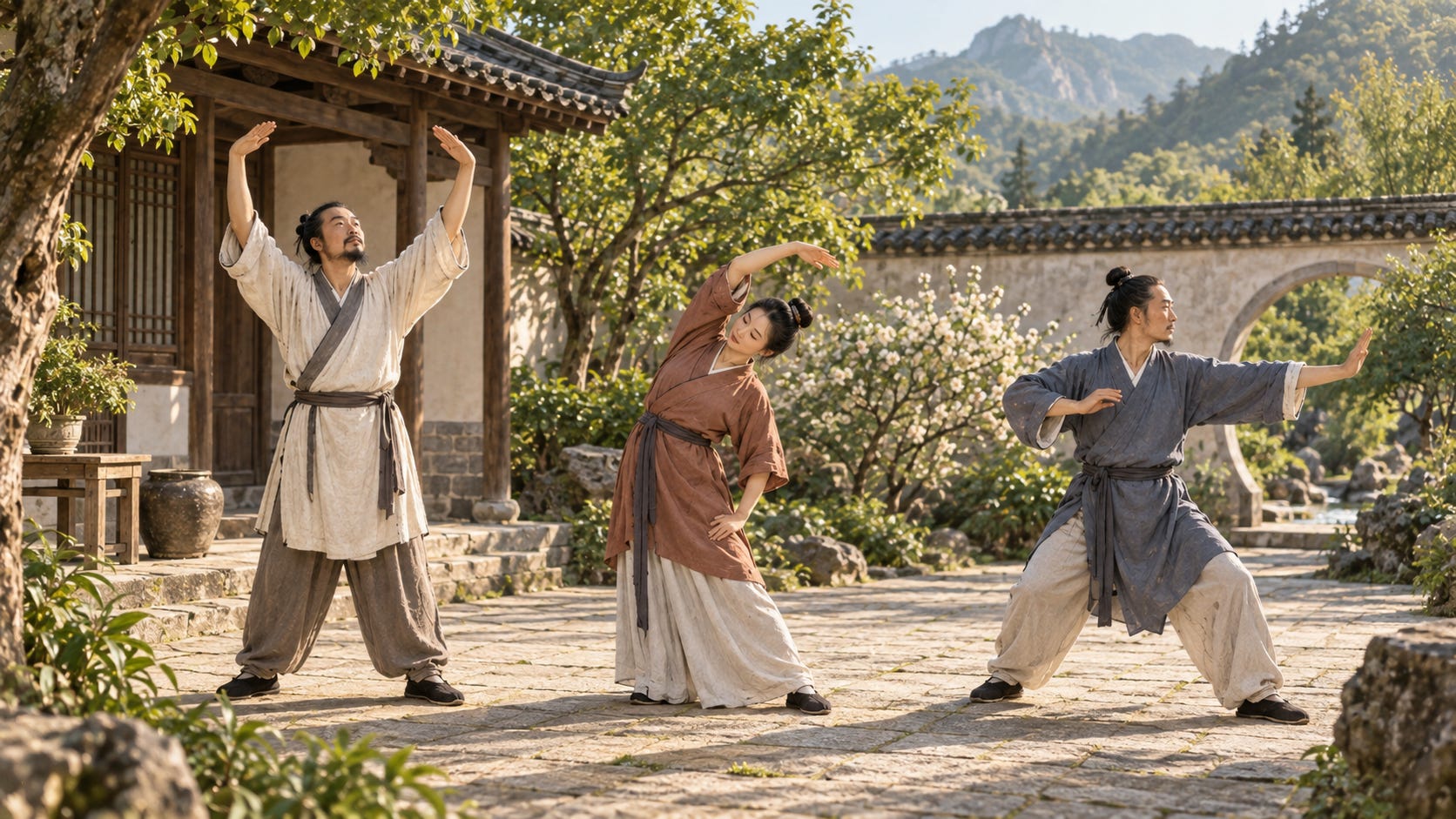
Animal movements also appear early. Chapter 15 of the Daoist text, the Zhuangzi describes breathing practices and exercises modeled on bears and birds, associating them with people seeking longevity. The passage reflects a culture in which such practices were already recognizable (Zhuangzi, 1891, Chapter 15).
Later, a biography of the physician Hua Tuo credits him with a system known as the Five Animal Frolics (五禽戲), drawing on the tiger, deer, bear, monkey, and bird. This account gives animal-based exercise a documented place in the history of Chinese health practice (Kohn, 2008).
Breathing and Internal Cultivation
Breathing practices had their own vocabulary. Tuna (吐納) referred to expelling and taking in, or exhalation and inhalation. Xingqi (行氣) meant moving or circulating qi. These breathing methods often accompanied movement exercises, so the older names could describe different parts of the same practice. Their variety helps explain why Qigong includes practices that look quite different from one another (Yang, 2018).
Daoist meditation also influenced the development of Qigong. Neidan (內丹), or internal alchemy, developed methods of inner transformation involving the traditional concepts of essence (jing), energy (qi), and mind/spirit (shen). Its aims included spiritual realization and returning to the Dao, understood as the source and underlying way of the natural world. Internal alchemy retains its own teachings and purposes, while some of its methods have entered modern Qigong (Kohn, 2008; Pregadio, 2018).
The name Qigong brought many older practices under one heading, but they did not begin as parts of a single system. Daoyin, Tuna, Yangsheng, and Neidan developed with different aims, even where their methods overlapped. Understanding these distinctions helps us recognize why a practice was taught, what it was intended to accomplish, and how its purpose may have changed over time. The modern name tells us relatively little about a method’s original purpose; its history tells us far more.
References
Dorcas, A., & Yung, P. (2003). Qigong: Harmonising the breath, the body and the mind. Complementary Therapies in Nursing and Midwifery, 9(4), 198–202. https://doi.org/10.1016/S1353-6117(03)00053-2
He, X. (2020). 清初青雲譜《太上靈寶淨明宗教錄》研究:與晚明「淨明宗教錄」的比較 [A study of the early-Qing Taishang Lingbao Jingming Zongjiao Lu: A comparison with its late-Ming predecessor]. Daoism: Religion, History and Society, 12–13, 135–174.
Kohn, L. (2008). Chinese healing exercises: The tradition of daoyin. University of Hawai‘i Press. https://uhpress.hawaii.edu/title/chinese-healing-exercises-the-tradition-of-daoyin/
Palmer, D. A. (2005). Qigong. In E. L. Davis (Ed.), Encyclopedia of contemporary Chinese culture. Routledge. https://hub.hku.hk/bitstream/10722/194528/2/Content.pdf
Pregadio, F. (2018). Which is the Daoist immortal body? Micrologus, 26, 385–408. https://fabriziopregadio.com/files/PREGADIO_Which_is_the_Daoist_Immortal_Body.pdf
Yang, D. (2018). Prescribing “guiding and pulling”: The institutionalisation of therapeutic exercise in Sui China (581–618 CE) [Doctoral dissertation, University College London]. UCL Discovery. https://discovery.ucl.ac.uk/id/eprint/10061324/
Zhang, J. (ca. 1029). Yunji qiqian (雲笈七籤) [Seven slips from the cloud bookcase] (Vol. 60). https://zh.wikisource.org/zh-hant/雲笈七籤/60
Zhuangzi. (1891). Zhuangzi (J. Legge, Trans.). Chinese Text Project. https://ctext.org/zhuangzi
Like what you read? Keep exploring …
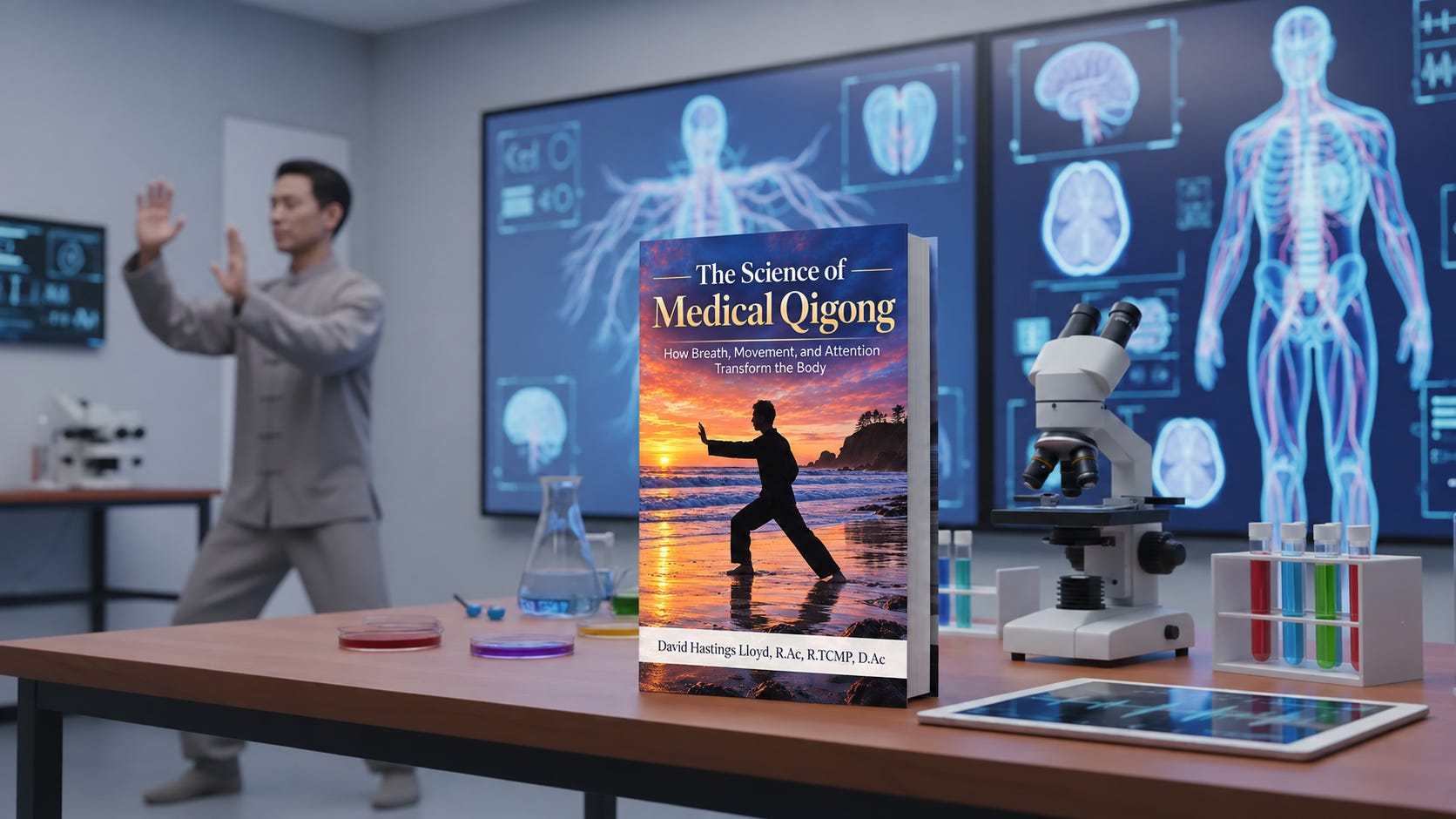
If this post resonated with you, you may enjoy my new book:
The Science of Medical Qigong: How Breath, Movement, and Attention Transform the Body
This book examines the growing body of scientific research exploring how Qigong practice influences human physiology. Drawing from clinical trials and experimental studies, it explains how coordinated breathing, posture, movement, and focused attention interact with the body’s regulatory systems.
The book explores research on:
• autonomic nervous system regulation
• cardiovascular function and blood pressure
• respiratory mechanics and lung capacity
• sleep quality and recovery
• inflammatory and immune signaling
• brain function and neural plasticity
• cognitive performance and mental health
Rather than presenting Qigong through mystical language, The Science of Medical Qigong approaches the subject through physiology, neuroscience, and clinical research, offering a clear explanation of how regular practice can influence the coordination and harmony of the body’s systems.
Available now in print and Kindle formats.